 how-to
Starting Martial Arts at 55: A Beginner's Guide
Table of Contents
- Starting Martial Arts at 55: Why Age Is Not a Barrier
- Martial Arts for Adults Over 50: Real Benefits Beyond Fitness
- Safe Martial Arts Training for Seniors: How to Train Without Risk
- Martial Arts for Balance and Flexibility: What Your Body Gains
- Choosing the Right Style and Finding a Quality Instructor
- Your First Month: A Step-by-Step Plan to Get Started
- Building Confidence and Overcoming Common Concerns
- Frequently Asked Questions
Last Updated: October 14, 2026
Starting Martial Arts at 55: Why Age Is Not a Barrier
Many adults believe that 55 is too late to start martial arts. The truth is different. Starting martial arts at 55 is not only possible, it's increasingly common. At Virginia Dojo, we work with adults in this age range every week. They gain confidence, improve their fitness, and learn practical self-defense skills.
Age brings advantages. You have patience. You understand discipline. You're motivated by real goals, not ego. These qualities matter far more than youth.
The biggest myth is that martial arts require athletic ability or prior experience. They don't. Martial arts training adapts to your body, not the other way around. You progress at your own pace. You set your own intensity.
Here's what changes when you start at 55:
- You focus on technique over power
- You learn natural movement patterns
- You build strength gradually
- You gain confidence in personal safety
- You join a supportive community of adults
The first step is understanding what's realistic. You won't move like a 25-year-old. That's not the goal. The goal is to move better than you do now. To feel stronger. To feel safer. To know you can handle yourself.
Martial Arts for Adults Over 50: Real Benefits Beyond Fitness
Adult martial arts training delivers benefits that go far deeper than physical conditioning. Many practitioners over 50 report that the mental and emotional gains matter most.
Balance and stability improve quickly. Martial arts training emphasizes footwork and weight distribution. These directly strengthen your balance. Falls become less likely. Your confidence in everyday movement increases.
Flexibility returns. You regain range of motion through controlled stretching and movement patterns. Stiff joints loosen. Daily activities become easier. Reaching, bending, and turning feel natural again.
Strength builds without strain. You use your own body weight against resistance. Muscles strengthen gradually. You develop functional strength, the kind that helps you carry groceries or stand up from a chair without thinking.
Mental clarity sharpens. Martial arts require focus. Your mind learns to concentrate on technique, breathing, and form. Stress melts away during training. Many adults report better sleep and clearer thinking.
Confidence transforms how you move through the world. You understand how to respond to threats. According to research from the American Psychological Association on physical activity and mental health, exercise that builds competence, like martial arts, produces lasting confidence gains.
Community matters. You train alongside other adults with similar goals. Friendships form. You feel part of something larger than yourself. Many students at Virginia Dojo say the community keeps them coming back more than the physical benefits.
These benefits compound over time.
Safe Martial Arts Training for Seniors: How to Train Without Risk
Safety is the foundation of effective training for adults starting at 55. The right approach protects your body while building strength and skill.
Start with proper instruction. A qualified instructor understands how older bodies move. They know which movements require modification. They watch for form breakdowns that signal fatigue.
Warm up thoroughly. Cold muscles are injury-prone. Spend 5-10 minutes warming up before training. Move gently. Increase your heart rate gradually.
Listen to your body. Pain is information. Sharp pain means stop. Mild discomfort during stretching is normal. Learn the difference. Never push through sharp pain.
Progress gradually. You don't add intensity quickly. You add volume first. More repetitions at the same level. Then, after weeks, you increase the difficulty slightly.
Rest between sessions. Your body needs recovery time. Training two or three times per week is ideal for beginners. This gives your muscles time to adapt and strengthen.
Stay hydrated. Drink water before, during, and after training. Dehydration sneaks up on you. It impairs performance and increases injury risk.
Communicate with your instructor. Tell them about any injuries, surgeries, or physical limitations. They'll modify movements to keep you safe. This is normal. Many adults train with modifications.
Research from the National Institute on Aging about physical activity and injury prevention confirms that proper progression and instructor guidance reduce injury risk significantly in older adults starting new physical activities.
Martial Arts for Balance and Flexibility: What Your Body Gains
Balance and flexibility are two of the most valuable gains from martial arts training at 55. These changes improve your daily life immediately.
Balance improves through stance work. Martial arts emphasize stable, grounded positions. You practice shifting your weight deliberately. You strengthen the muscles that keep you upright. Falls become less likely. Your confidence on stairs, uneven ground, and slippery surfaces increases.
Flexibility returns through controlled stretching. You don't force flexibility. You gently extend your range over weeks and months. Hamstrings loosen. Hip mobility improves. Shoulder range increases. Daily movements that felt restricted become fluid again.
Core strength develops naturally. Martial arts movements engage your core constantly. Your abdominal and back muscles strengthen. This supports your spine. Your posture improves. Back pain often decreases.
Coordination sharpens. Your body learns to move different limbs in different directions simultaneously. This sounds simple. It's not. Your nervous system adapts. Movement becomes smoother. You feel more in control of your body.
Here's what changes in practice:
Benefit | What Happens | Timeline |
|---|---|---|
Balance | Stance work strengthens stabilizer muscles | 4-6 weeks |
Flexibility | Gentle stretching expands range of motion | 6-8 weeks |
Strength | Bodyweight resistance builds functional power | 8-12 weeks |
Coordination | Repeated movements train your nervous system | 6-8 weeks |
These gains compound. Better balance means you move with more confidence. More confidence means you move more. More movement means faster improvement.
Choosing the Right Style and Finding a Quality Instructor
Not all martial arts are equally suited to adults starting at 55. Some styles emphasize speed and power. Others emphasize technique and natural movement.
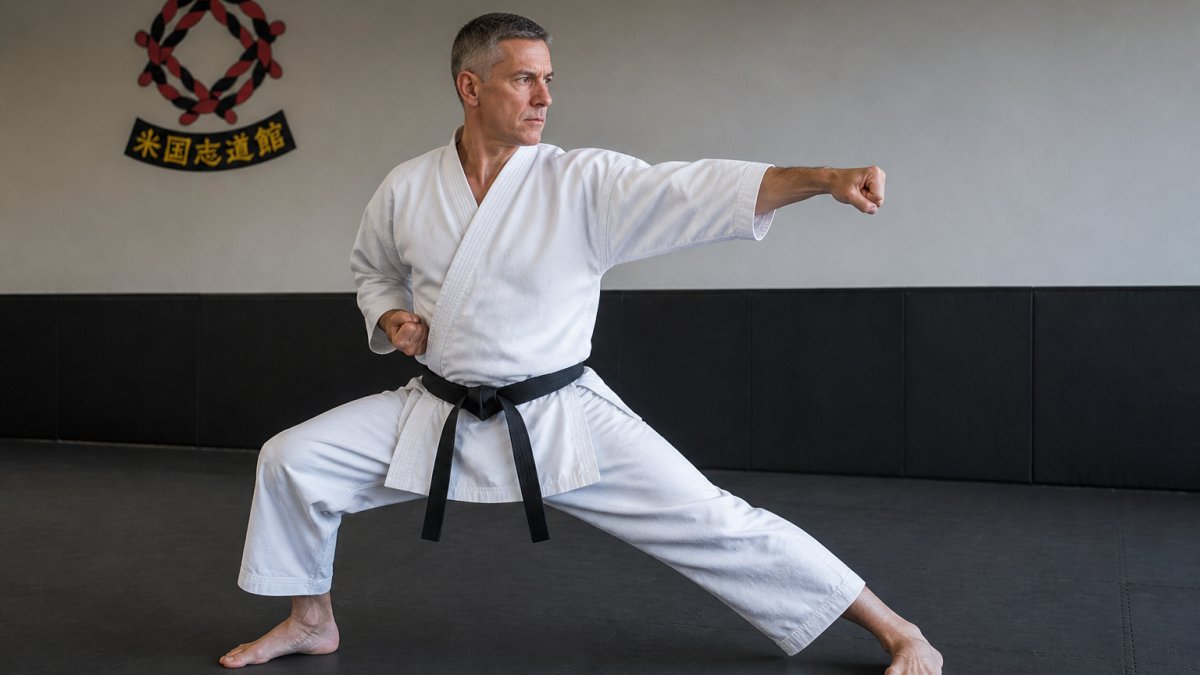
Okinawan Shorin Ryu focuses on technique over strength. This style uses natural body mechanics. You use your opponent's energy rather than meeting force with force. This is ideal for adults over 50. You don't need to be the strongest person in the room. Technique wins.
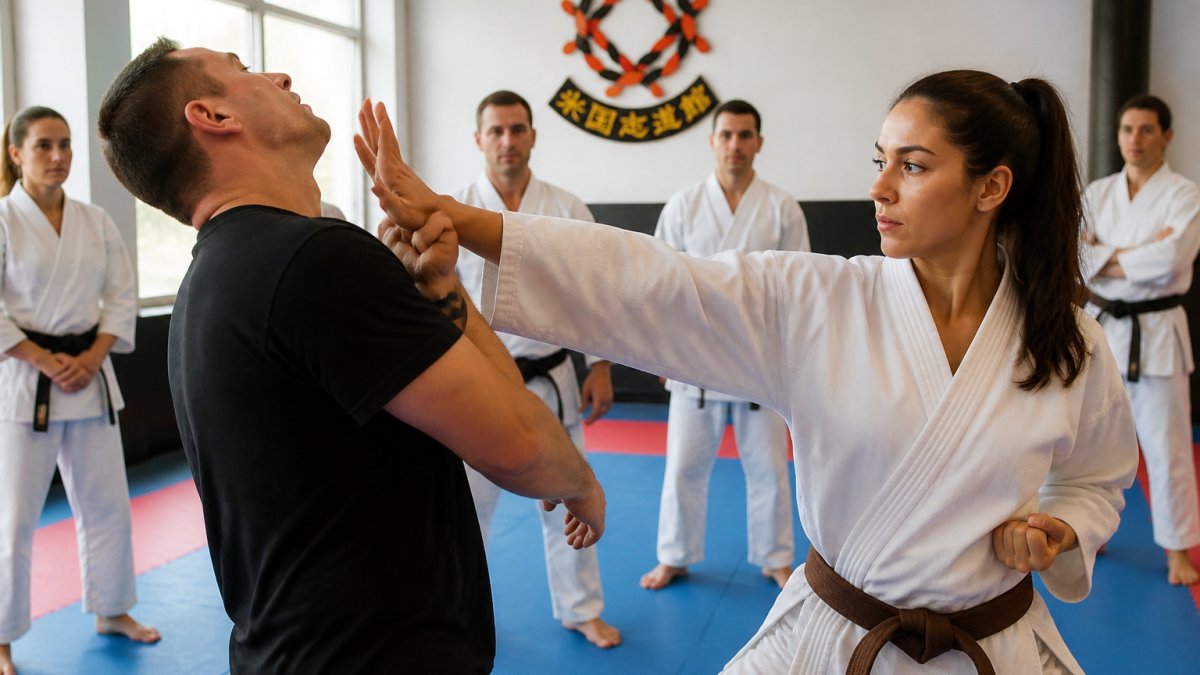
Karate teaches practical self-defense. You learn responses to common threats. These responses work in real situations. You gain confidence knowing you can protect yourself. This matters deeply to many adults in Alexandria seeking genuine safety skills. Programs like Adult Self Defense Karate are specifically designed for this purpose.
The instructor makes everything different. A good instructor:
- Modifies movements for your body
- Watches your form constantly
- Corrects problems before they become habits
- Creates a supportive, non-competitive environment
- Understands how older bodies adapt
- Listens to your concerns
- Celebrates your progress
A poor instructor:
- Treats everyone the same
- Ignores form breakdowns
- Pushes you beyond your limits
- Creates a competitive atmosphere
- Doesn't adapt to individual needs
- Makes you feel rushed
Questions to ask when visiting a school:
Start Now Before Someone Nabs Your Spot in Class! →
- How long has the instructor been teaching adults over 50?
- What modifications do you make for different fitness levels?
- What's your approach to progression and pacing?
- Do students train at their own pace or in lockstep?
- Can I observe a class before joining?
- What happens if I need to take time off?
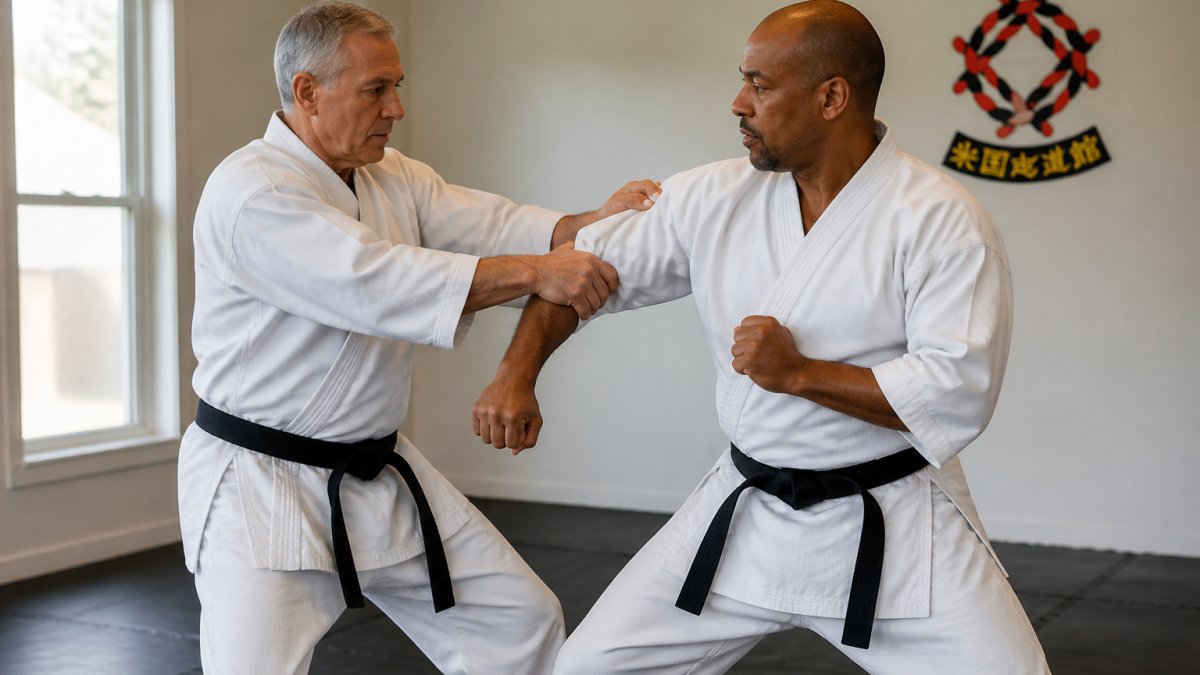
Virginia Dojo specializes in adult training. Our classes include adults in their 50s, 60s, and beyond. Everyone trains at their own level. No contracts lock you in. No forced progression. Just consistent, patient instruction focused on your goals.
Your First Month: A Step-by-Step Plan to Get Started
Your first month sets the tone for everything that follows. Here's how to approach it strategically.
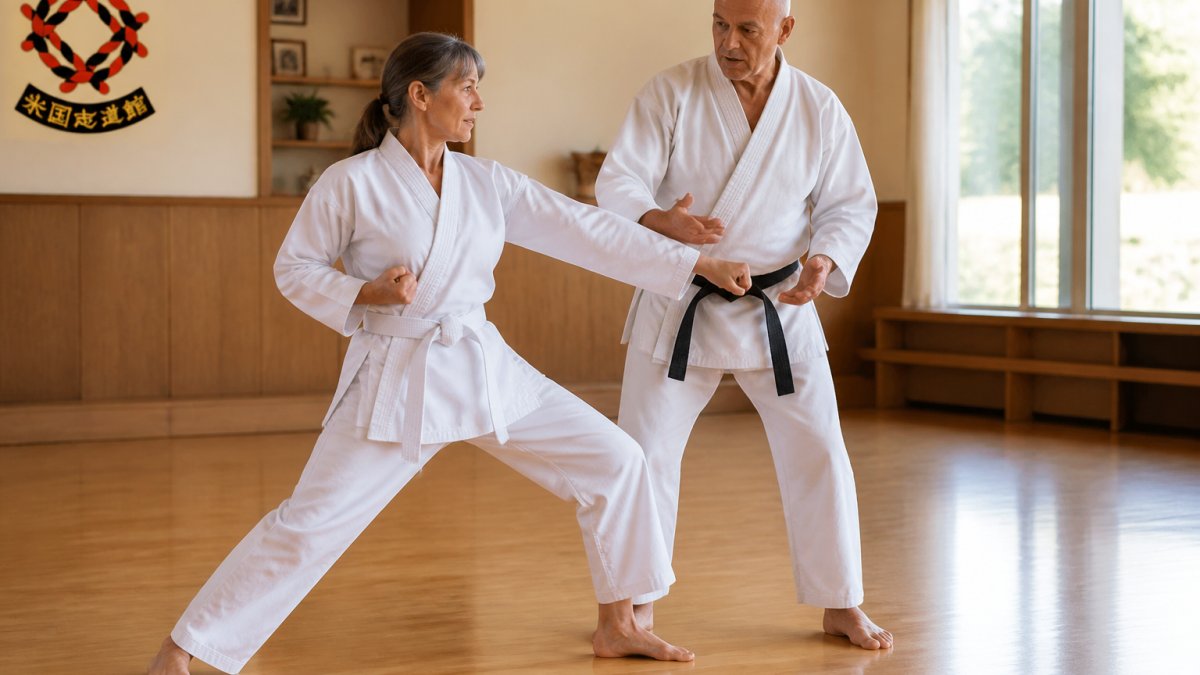
Week 1: Observe and learn the basics
Your first class is about observation. Watch how students move. Notice the instructor's corrections. Pay attention to the environment. Does it feel welcoming? Are people your age present?
Don't worry about perfection. Your nervous system is learning new patterns. This takes time.
Week 2: Establish consistency
Attend your second class. Your body remembers more than you think. Movements feel slightly more natural. You're building a habit.
Week 3: Add complexity
You're ready for simple combinations. Two or three movements in sequence. Your instructor will guide this. You're building muscle memory.
Week 4: Assess and adjust
You've trained four times. How do you feel? Are you sore? This is normal. Soreness should decrease by week four. If pain persists, tell your instructor.
Are you enjoying it? Do you feel part of the community? These matter more than physical progress at this stage.
Decide: Will you continue? If yes, commit to month two. Consistency matters far more than intensity.
Here's what to expect physically:
- Mild soreness in weeks 1-2
- Slightly improved flexibility by week 3
- Noticeably better balance by week 4
- Increased confidence in your body
Building Confidence and Overcoming Common Concerns
Adults starting martial arts at 55 often carry doubts. These concerns are normal. Here's how to address them.
"I'll feel out of place because I'm older."
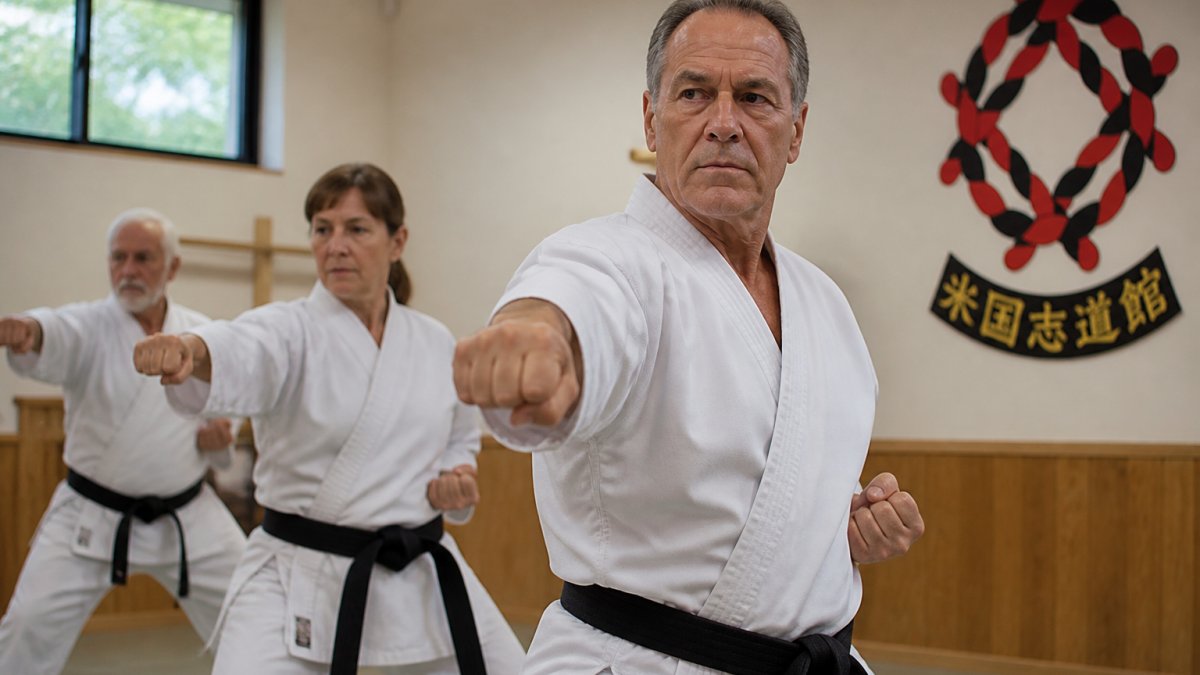
You won't. Classes at Virginia Dojo include many adults your age. You train alongside people with similar goals and similar bodies.
"I'm not flexible or strong enough."
Flexibility and strength come through training. You don't need them to start. You build them as you go. Your instructor knows this.
"I'll get injured."
Injury risk is low when you train with proper instruction and progression. You control the intensity. You stop when something hurts.
"I won't keep up with younger students."
You're not trying to. You're training at your level. Your instructor manages this. Younger students move faster. You move with better technique. Both are valuable.
"I don't have a martial arts background."
Neither do most adults starting at 55. This isn't a disadvantage. You're not unlearning bad habits. You're learning clean, efficient technique from the start.
"I'm worried about personal safety in real situations."
This is why many adults train. Options like Mid-Day Dojo Class offer flexible scheduling that fits adult life while building these essential skills.
According to research from the National Council on Aging about confidence and physical activity, adults who gain physical competence through training report significantly higher confidence in their ability to handle unexpected situations.
"What if I need to take time off?"
Life happens. Illness, travel, family obligations, these interrupt training. Good schools understand this. No contracts. No penalties. You return when you're ready.
Starting martial arts at 55 transforms how you move, how you feel, and how you see yourself. The first step is simple: visit a local class.
Frequently Asked Questions
Can I start karate at 55 if I am out of shape?
Yes. Starting martial arts at 55 works for all fitness levels because training adapts to your current abilities. Classes focus on gradual progression and technique over strength. Many students improve cardiovascular health, flexibility, and muscle tone within the first few weeks. Work with your instructor to set a pace that feels manageable, and expect soreness to fade quickly as your body adapts.
What is the best martial art for adults over 50?
The best martial art for adults over 50 depends on your goals and physical condition. Karate emphasizes natural movement and technique, making it accessible for older beginners. Styles that focus on balance, joint health, and controlled movement are ideal. Look for instructors experienced with mature students who understand how to modify techniques and avoid high-impact training. A non-competitive environment matters most for long-term enjoyment and safety.
How can older beginners train martial arts safely?
Safe martial arts training for seniors requires clear communication with your instructor about any injuries, limitations, or health concerns. Warm up thoroughly before each session, progress slowly through techniques, and take rest days between classes. Focus on proper form rather than speed or power. Choose a school that emphasizes technique over intensity. Always listen to your body and speak up if something feels wrong.
Will martial arts training really improve my balance and flexibility?
Martial arts for balance and flexibility delivers measurable improvements. Consistent training strengthens stabilizer muscles, improves proprioception, and increases range of motion in joints and hips. Most students notice better balance within 4-6 weeks and improved flexibility within 8-12 weeks. These gains reduce fall risk and make everyday movement easier. The key is regular practice with proper technique, not intensity.