 comparison
Low-Contact Martial Arts for Adults: Safe Alternatives
Table of Contents
- Why Adults Choose Low-Contact Martial Arts
- Low-Contact Martial Arts for Adults: Your Main Options
- Adult Self-Defense Classes in Alexandria VA: What to Expect
- Beginner Karate for Adults: Building Confidence Without Pressure
- What to Expect at an Adult Karate Class
- How to Choose the Right Fit for Your Goals
- Fitness, Balance, and Confidence: Real Benefits for Adults
- Frequently Asked Questions
Last Updated: October 11, 2026
Why Adults Choose Low-Contact Martial Arts
Many adults in Alexandria and across Virginia are discovering that low-contact martial arts for adults offers the fitness, confidence, and self-defense skills they want without the intensity of traditional combat training. The appeal is straightforward: you get real martial arts training that improves balance, flexibility, and mental clarity while respecting your body's limits.
Techniques rooted in natural movement work better than brute strength, especially as we age. You learn practical self-defense that relies on positioning and timing rather than explosive power, building genuine confidence because the skills transfer to real situations.
At Virginia Dojo, we've worked with adults who came in skeptical about whether they could learn martial arts at their age or fitness level. What they discovered was that low-contact martial arts for adults actually accelerates learning. Without the fear of getting hit, students focus on understanding technique. They practice more freely, ask more questions, and improve faster.
Low-Contact Martial Arts for Adults: Your Main Options
Understanding the contact level of each style is essential. The three main approaches for adult learners differ significantly in impact exposure, injury risk, and how contact is managed during training.
Karate: Controlled Striking with Impact Awareness
Okinawan Shorin Ryu karate emphasizes natural body mechanics and practical self-defense scenarios, teaching you to use positioning and timing rather than relying on strength.
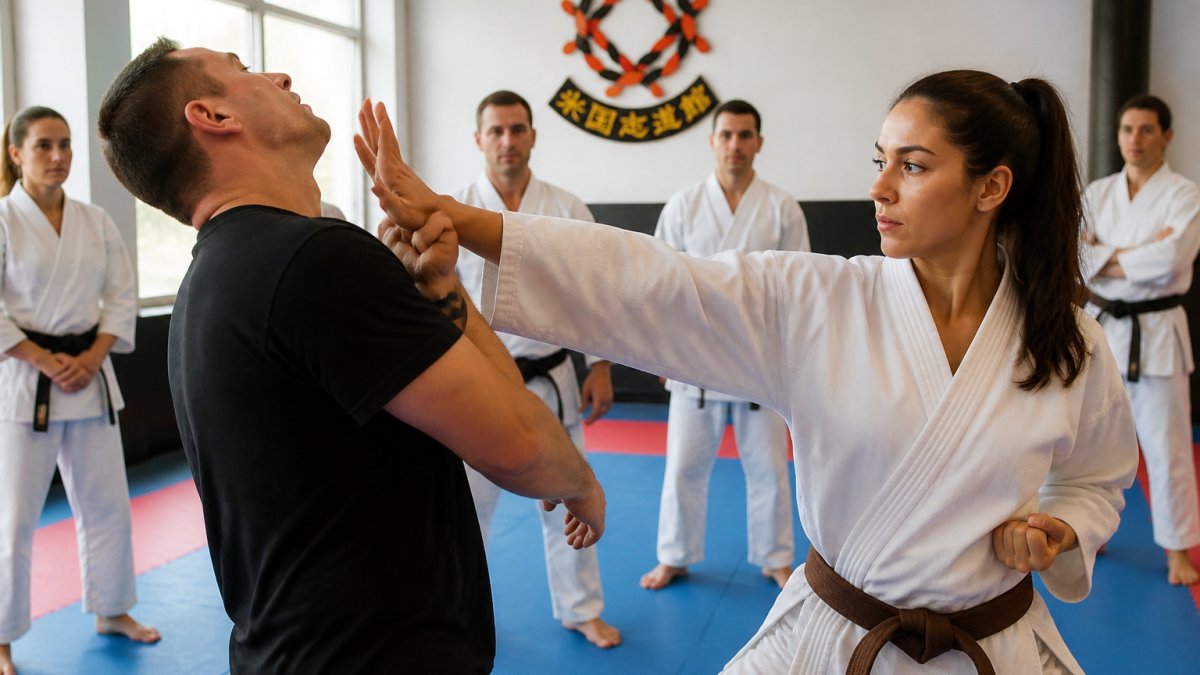
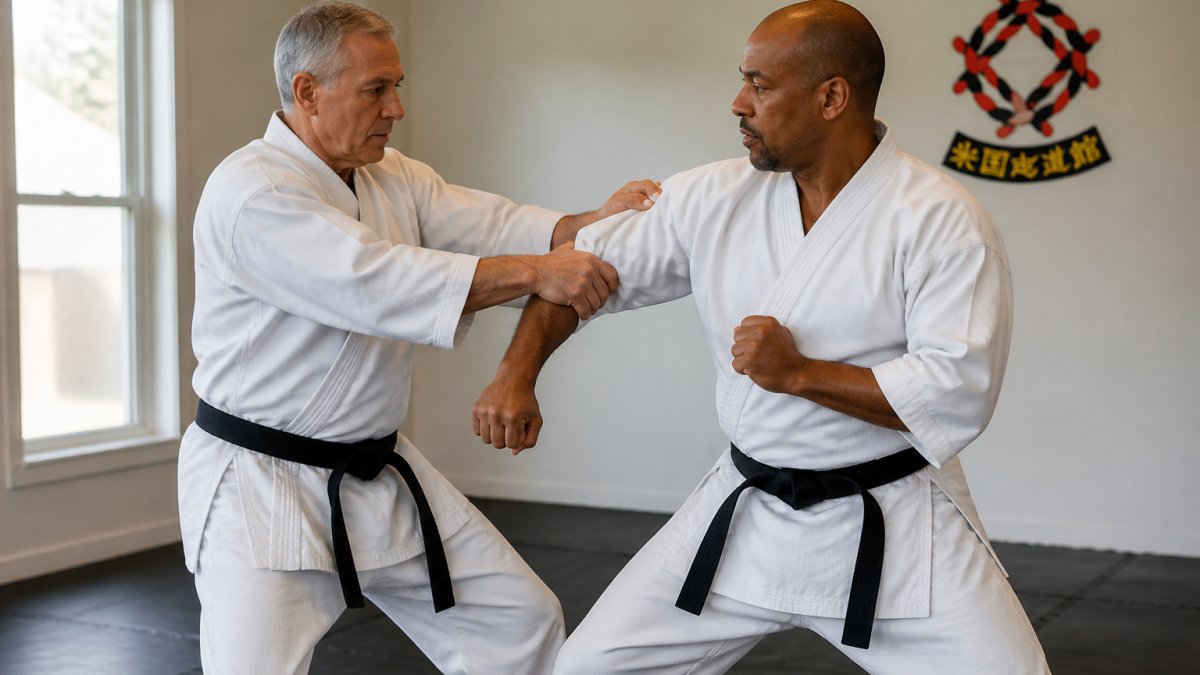
In low-contact karate classes, striking practice is controlled on pads, heavy bags, or with partners holding mitts, making light contact with another person's body. When practicing with a partner, the emphasis is on light contact or no contact with focus on proper form.
Injury risk in technique-focused karate is low; most injuries come from overuse rather than acute impact. Proper warm-up, controlled speed, and instructor feedback minimize these risks.
Brazilian Jiu-Jitsu and Grappling: Limited Striking, Controlled Pressure
Brazilian Jiu-Jitsu and grappling arts offer a fundamentally different contact profile: there is limited striking. You work with joint locks, positional control, and leverage-based techniques. The physical demands are different, and so is the injury pattern.
In grappling, contact is continuous but controlled, you position and control your partner without striking or impact trauma. Grappling carries joint stress in the shoulders, elbows, and knees because you're applying and resisting pressure. Beginners train at reduced intensity, focusing on technique. Quality programs emphasize tapping out before joints are stressed, and partners respect that signal immediately.
Kickboxing Fundamentals: Light Contact or Pad Work
Injury risk in technique-focused kickboxing is moderate; proper form and gradual progression matter. Most injuries are overuse-related. Kickboxing improves cardiovascular fitness and leg strength when the class prioritizes technique over intensity.
Adult Self-Defense Classes in Alexandria VA: What to Expect
Self-defense training teaches you how to recognize danger and respond effectively. Quality programs meet you where you are and build practical skills. Adult Self Defense Karate programs are specifically designed to teach these essential techniques in a supportive environment.
You'll learn awareness techniques first, how to read situations, recognize pre-attack indicators, and position yourself safely. Then you'll learn specific responses to common threats through scenario-based training.
Our approach to adult self-defense emphasizes natural percussion and grappling responses. You learn how your body naturally defends itself and refine those instincts with proper mechanics, making you more effective in real situations.
Beginner Karate for Adults: Building Confidence Without Pressure
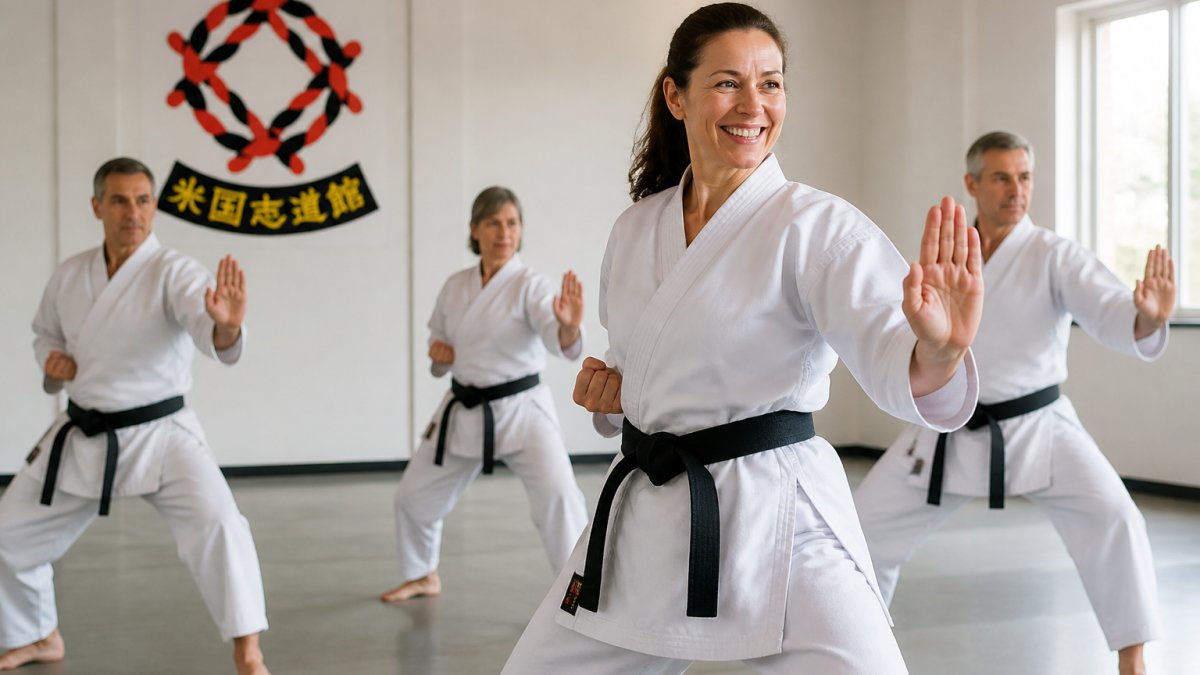
Beginner karate for adults is designed around adult learners, not scaled-down versions of youth classes. The pace is different. The expectations are different. The environment is built for people who are starting fresh, whether you're 25 or 65, returning after years away, or managing a previous injury.
Class Structure and Pacing for Adult Learners
A proper adult beginner program separates adults from children and structures classes around how adults learn. Adult classes are offered in early morning, evening, or weekend time slots.
Progression is deliberate and transparent. Instructors break down movements into steps: stance, hand position, full technique, then application. You practice against cooperative partners with no pressure to advance quickly. The focus is on solid fundamentals.
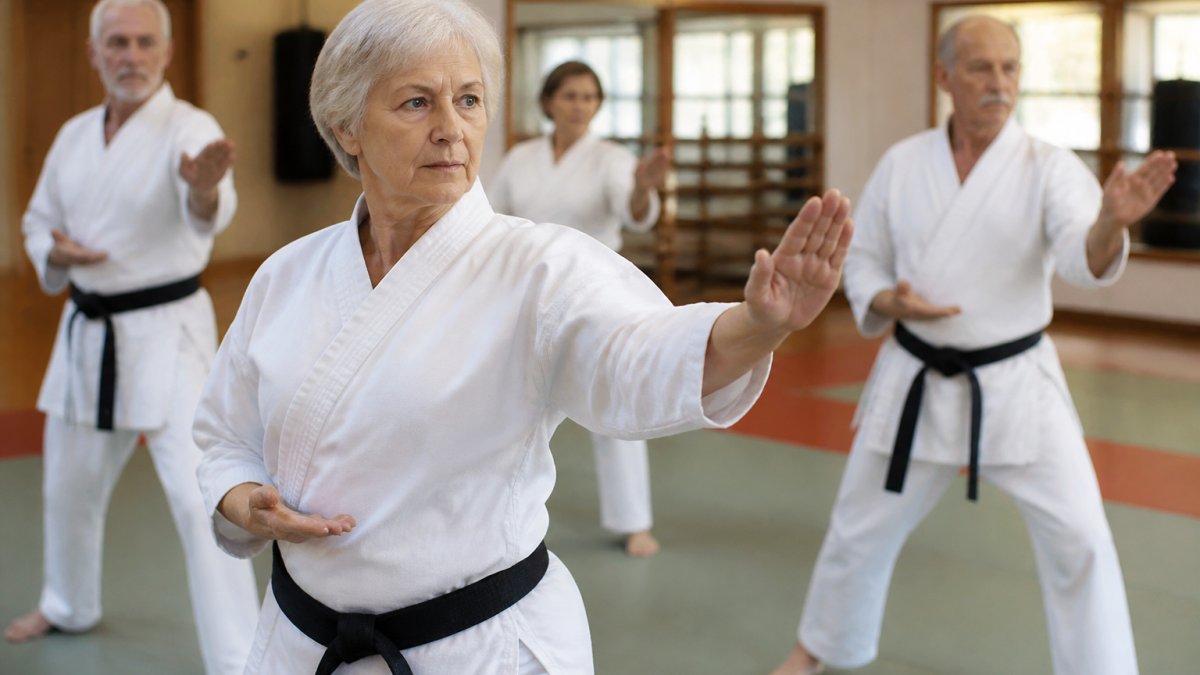
Modifications for Older Adults and Those with Physical Limitations
Quality adult programs accommodate different fitness levels and physical limitations. Instructors ask about injuries, joint concerns, or mobility restrictions and use this information to show modifications throughout class.
For example, knee issues are addressed with stable-stance kicks or slow practice. Shoulder limitations are accommodated with smaller, controlled movements. Back injuries are managed with proper posture and avoided movements.
Balance and fall risk are common concerns (the CDC). Good programs address this directly with stances that improve balance, safe movement, and balance-building warm-up exercises. You're never put at risk of falling. Programs like Womens Self Defense and other specialized classes recognize that different populations have different needs and design instruction accordingly.
If you can't do a high kick, you practice at a comfortable height. The mechanics and self-defense application remain the same. Consistent training naturally improves flexibility without forcing painful positions.
Start Now Before Someone Nabs Your Spot in Class! →
Community and Consistency
In a proper adult program, everyone starts from the same place. You learn alongside people in similar life stages, creating a supportive community where people encourage each other. Experienced students are welcoming because they remember starting out.
Consistency matters more than intensity. Most instructors recommend 2-3 classes per week, but even once weekly produces improvement. Adults training consistently report significant improvements in balance, posture, confidence, and body awareness.
What to Expect at an Adult Karate Class
An adult karate class typically runs 60 minutes. You'll arrive early, change into your gi, and instructors will ask about any injuries or concerns.
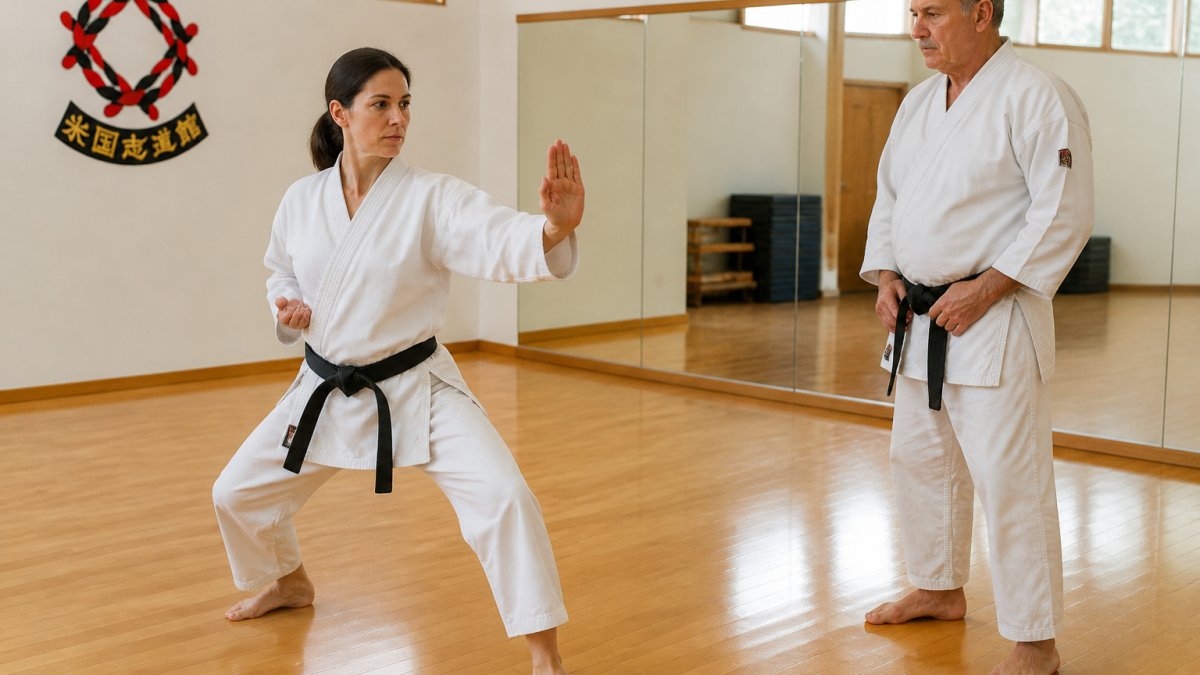
Class starts with gentle warm-up exercises to improve flexibility and circulation. You'll learn or review techniques with instructor demonstration, partner practice, and feedback. You might spend 20 minutes on a single technique from different angles.
The final portion of class often includes practical applications. You practice how a technique works in a self-defense context. This is where the training connects to real-world scenarios.
Most importantly, adult classes maintain a calm, focused atmosphere. There's no yelling or pressure. People of different ages and fitness levels train together. The instructor adjusts techniques for individual needs. If something doesn't work for your body, the instructor shows you a modification.
How to Choose the Right Fit for Your Goals
Start by being clear about what you want from martial arts training. Are you seeking fitness improvement? Self-defense skills? Mental clarity and stress reduction? A combination of these? Your primary goal should guide which style you explore.
Consider your comfort with contact. If you're comfortable with controlled contact, karate with proper technique focus works well.
Look at the program structure. Does the school offer classes specifically for adults? Do instructors understand the needs of adult learners? A program designed for adults will have different pacing, different expectations, and different community dynamics than a program focused in children.
Visit classes before committing. Watch how instructors interact with students. Do they correct technique with respect? Do students seem engaged and focused? Does the environment feel welcoming? A good program will let you observe or even try a class for free.
Consideration | What to Look For | Why It Matters |
|---|---|---|
Class structure | Adult-specific classes, beginner levels separated from advanced | Adults learn differently and need appropriate pacing |
Contact level | Clear policy on striking, grappling, and controlled practice | Matches your comfort and safety needs |
Instructor experience | Years of teaching, understanding of adult learners | Affects quality of instruction and program design |
Community feel | Supportive environment, no pressure | Determines whether you'll stay consistent |
Flexibility | No long-term contracts, trial classes available | Lets you find the right fit without financial risk |
Fitness, Balance, and Confidence: Real Benefits for Adults
The physical benefits of martial arts training are well-documented. You improve cardiovascular fitness, build functional strength, and develop better balance and coordination. But the confidence you gain might matter even more.
Learning self-defense skills changes how you move through the world. You're more aware of your surroundings. You understand your capabilities and limitations. You know how to respond to threats. This isn't about becoming invincible. It's about having a realistic sense of your ability to handle dangerous situations.
Balance and flexibility improvements are immediate. Within weeks of consistent training, you'll notice you move more easily. Your posture improves. You have fewer aches and pains. These aren't small benefits for adults concerned about fall risk or general mobility.
The mental benefits are equally important. Martial arts training provides structure, measurable progress, and a sense of achievement. You set goals, work toward them, and see concrete improvement. In a supportive community, you build friendships with people who share your commitment to personal growth.
Choosing low-contact martial arts for adults is choosing training that respects your body while building real skills. At Virginia Dojo, we've spent over 50 years helping adults in Alexandria discover that martial arts isn't about being young or athletic, it's about commitment to learning. Our Okinawan Shorin Ryu approach emphasizes natural movement and practical self-defense, with no pressure. Whether you're seeking fitness, confidence, or genuine self-defense skills, we offer a supportive environment where adults and mature teens train together without contracts or pressure. Start now and experience how martial arts can transform your fitness, balance, and sense of personal safety.
Frequently Asked Questions
What martial arts are suitable for adults who want less physical contact?
Many Karate dojos offers low-contact training options. Karate focuses on natural movement and real-world self-defense without impact pressure. The best choice depends on your fitness level, goals, and comfort with different training styles. Many schools, including those offering adult self-defense classes in Alexandria VA, let you try a free session to see what feels right.
Can adults learn practical self-defense without intense physical contact?
Yes. Effective self-defense relies on technique, awareness, and positioning rather than brute force or high-impact drills. Low-contact martial arts for adults teach real-world responses to threats using natural movement and body mechanics. This approach is especially valuable for older adults and those returning to fitness after injury. Instructors can modify training intensity while maintaining the practical skills you need to feel confident and prepared in everyday situations.
What should I ask before choosing a martial arts school?
Ask about class structure, instructor experience, and whether beginners train separately from advanced students. Inquire about the contact level and whether you can observe or try a free class first. Find out if the school uses contracts and what happens if you need to pause training. Ask about the instructor's background and philosophy—look for experienced teachers who emphasize technique and safety. Schools that welcome mature adults and focus on personal growth rather than are usually the best fit for beginners seeking confidence and fitness.
How can low-contact martial arts help with balance and flexibility?
Martial arts training naturally builds balance through stance work, weight shifts, and footwork patterns. Kicks and defensive movements stretch muscles and improve range of motion over time. The focused, deliberate nature of technique practice strengthens stabilizer muscles that support balance and posture. For adults concerned about falls or mobility, these benefits compound—better balance reduces injury risk, and improved flexibility makes daily movement easier. Beginner karate for adults is structured to develop these benefits safely without requiring strength or prior experience.