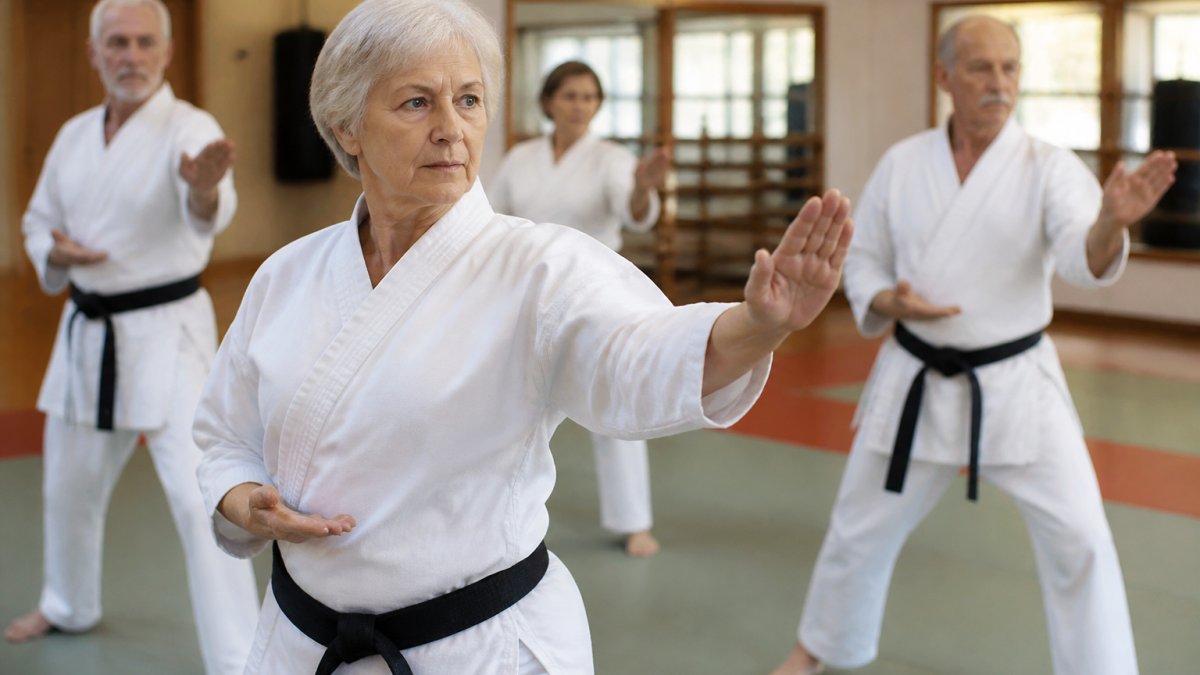
 blog
blog
Best Martial Arts for Seniors: A 2026 Guide
Table of Contents
- Best Martial Arts for Seniors: What Actually Works After 50
- 7 Best Martial Arts for Older Adults, Ranked by Joint Impact
- Best Martial Art for Older Beginners: Matching Style to Your Body and Goals
- Low-Impact Martial Arts for Seniors: What to Expect from Each Style
- Martial Arts Safety Tips for Seniors: Screening, Adaptations, and Red Flags
- How Often Should Seniors Practice Martial Arts?
- How to Assess a School and Instructor Before You Commit
- Conclusion: Start Where You Are, Build from There
- Frequently Asked Questions
Last Updated: October 5, 2026
Best Martial Arts for Seniors: What Actually Works After 50
The best martial arts for seniors are low-impact styles that build balance, strength, and practical self-defense without punishing your knees and hips.
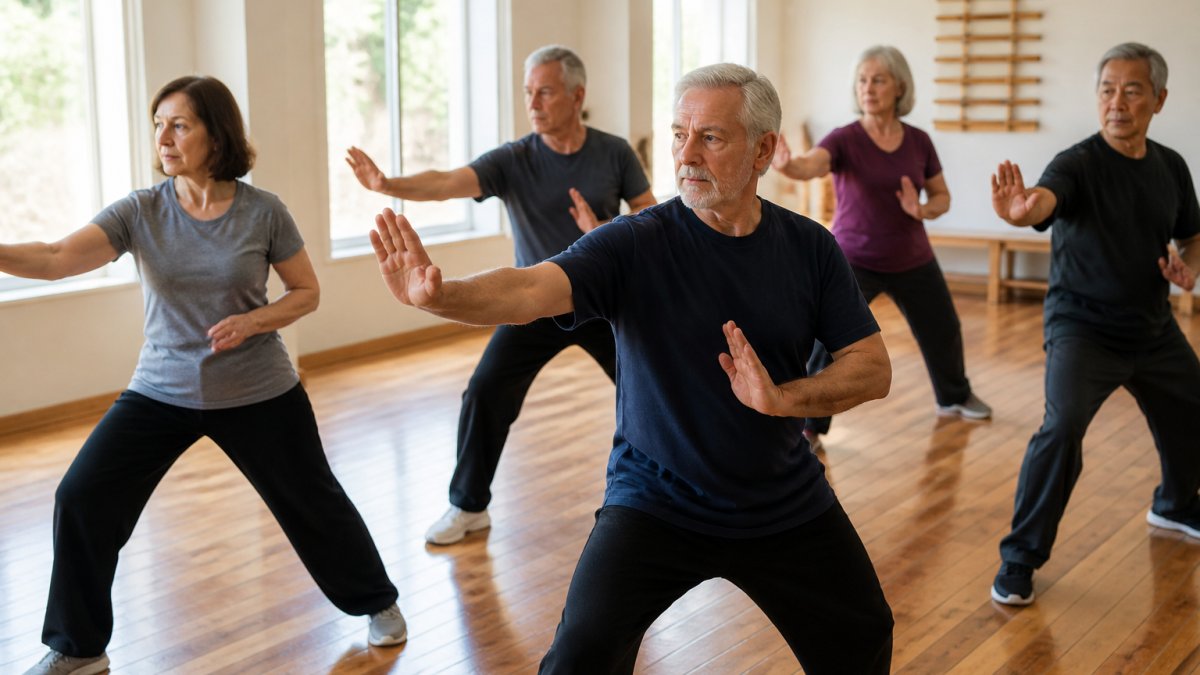
Most guides rank styles by how tough they look. That is backwards.
The CDC's older adult fall prevention data shows that falls are a leading cause of injury for adults over 65. Balance training directly lowers that risk.
What Makes a Martial Art Senior-Friendly
A senior-friendly martial art limits hard impacts, avoids forced deep stances, and lets you train at your own pace while building balance, coordination, and self-defense skills.
Look for three things:
- Low joint impact. Fewer jumps, spins, and hard landings.
- Adaptable technique. Moves you can modify for stiff knees or hips.
- Balance work. Standing drills that train your stability.
What most guides miss is that intensity matters more than the style name.
The Virginia Dojo’s Mid-Day Dojo Class takes this into consideration as the focus is on 50 to 70 year olds.
7 Best Martial Arts for Older Adults, Ranked by Joint Impact
These seven styles are ranked from gentlest to most demanding on the joints, and each can work for an older beginner with the right instructor.
"Joint impact" is not the same as "difficulty." A style can be low-impact but technically demanding (Wing Chun), or higher-impact but easy to scale down (boxing). Match the style to the joint you are protecting, not to how impressive it looks.
1. Tai Chi
- Contact level: None. Solo forms and push-hands drills only.
- Fall risk: Very low. Weight shifts are slow and controlled.
- Joint loading: Minimal. Knees stay bent but not deeply loaded; no jumps or landings.
Tai Chi is the gentlest option here, using slow, flowing movements that build balance and lower-limb strength with almost no joint impact. Many senior centers teach it, and it pairs well with any other art you try later. The trade-off: it teaches relaxation and stability more than practical self-defense.
2. Okinawan Shorin Ryu Karate
- Contact level: Low to none in a well-run senior program. Partner drills are controlled. Focusing on cooperation to learn self defene technique application, rather than competition.
- Fall risk: Low. Stances are natural rather than deep. Plus you learn how to fall to avoid injuries.
- Joint loading: Low. Knees and hips stay in a comfortable natural range for self defense; no high kicks required.
Shorin Ryu is a traditional Okinawan self defense karate style built on natural movement rather than brute strength. That makes it a strong fit for older adults who want real self-defense skills without heavy contact. At Virginia Dojo, our Shorin Ryu program is taught by a 9th-degree master with over 50 years of experience. Classes include cooperative partner drills, but no sparring. You learn the close-in grappling or tusseling applications most fights devolve into without injuring your training partners. There is ample opportunity for more physical contact as you increase in rank, you discover you can be more aggressive with higher ranked students. Never with lower ranked students. “Make Friends with Karate!” — Grand Master Seikichi Iha, 10th Degree, Shorin Ryu Karate.
3. Wing Chun Kung Fu
- Contact level: Low. Chi sao (sticking hands) drills are cooperative, not competitive.
- Fall risk: Very low. The stance is upright and feet stay planted.
- Joint loading: Low. Few high kicks, no deep lunges, no ground work.
Wing Chun is a close-range striking art that relies on structure and economy of motion, not power. It suits older beginners because it does not demand high kicks or deep lunges. The upright stance is easier on knees and hips. The main caution is wrist and elbow strain from repeated trapping drills; build volume gradually.
4. Brazilian Jiu-Jitsu (Adapted)
- Contact level: Moderate. Drilling is cooperative; live rolling is where contact rises.
- Fall risk: Moderate. You go to the ground on purpose, which is different from falling unexpectedly.
- Joint loading: Moderate to high on shoulders, neck, and knees during escapes and guard work.
Adapted BJJ focuses on ground control and escapes with controlled drilling instead of hard rolling. It builds strength and mobility, but ground work can be hard on shoulders and necks. Choose a school with a dedicated beginners or over-50 class, and approach this style most cautiously if you have neck or shoulder issues.
5. Filipino Kali, Escrima, and Arnis
- Contact level: Low to moderate. Stick drills are usually cooperative; sparring is optional.
- Fall risk: Low. Footwork is agile but not acrobatic.
- Joint loading: Moderate on wrists, hands, and forearms from weapon work.
These weapon-based arts use sticks and open-hand techniques, building coordination and agility at a controlled pace. The wrist and hand work is demanding, so pace yourself early; if hand arthritis is a concern, ask about padded or foam trainers before you commit.
6. Boxing (Non-Sparring)
- Contact level: None if you skip sparring. Bag and pad work only.
- Fall risk: Low. Footwork is controlled and the ring is optional.
- Joint loading: Moderate. Shoulders and wrists take repeated impact on the bag.
Non-sparring boxing builds conditioning, footwork, and striking power through bag and pad work. It is high-energy but joint-friendly when you skip the ring. Avoid any gym that pushes you toward contact sparring. Get your hands wrapped properly; wrist support matters more after 50 than most beginners expect.
7. Muay Thai (Modified)
- Contact level: Moderate to high in standard classes. Modified versions remove the clinch and hard kicks.
- Fall risk: Low to moderate depending on sweeps and balance drills.
- Joint loading: Higher. Knees, hips, and shins take repeated impact.
Modified Muay Thai keeps the striking and conditioning while cutting the hard kicks and clinch work. It is the most demanding style here, so if you have knee or hip limits, treat it as an advanced choice only after building a base in a gentler style.
Style | Contact Level | Fall Risk | Joint Loading | Self-Defense Focus | Key Modification |
|---|---|---|---|---|---|
Tai Chi | None | Very low | Minimal | Low | Chair-assisted forms |
Shorin Ryu Karate | Low | Low | Low | High | Higher stances, no sparring, plenty of partner drills |
Wing Chun | Low | Very low | Low | High | Slower chi sao, wider stance |
Adapted BJJ | Moderate | Moderate | Moderate-high | High | Positional drilling only |
Kali / Escrima / Arnis | Low-moderate | Low | Moderate (wrists) | High | Padded sticks, lighter rattan |
Boxing (non-sparring) | None | Low | Moderate (shoulders) | Moderate | Shorter rounds, hand wrapping |
Modified Muay Thai | Moderate-high | Low-moderate | Higher | Moderate | No clinch, no sweeps |
Use the table as a filter, not a verdict. The right style is the one whose modifications you can actually get at a school near you.
Best Martial Art for Older Beginners: Matching Style to Your Body and Goals
The best martial art for older beginners matches your joints and your reason for training. Start with your goal, then filter by what your body tolerates.
Use this quick guide:
- Want balance and calm? Choose Tai Chi.
- Want real self-defense in a Friendly, Cooperative Class? Choose Shorin Ryu Karate or Wing Chun.
- Want conditioning? Choose non-sparring boxing.
If you are coming from a gym background, expect martial arts to feel slower at first. That pace is the point.
Low-Impact Martial Arts for Seniors: What to Expect from Each Style
Low-impact martial arts for seniors still build strength, flexibility, and range of motion. The difference is how they load your joints.
Tai Chi and Wing Chun keep you upright almost the entire class. Shorin Ryu Karate mixes standing drills with controlled partner work.
A typical class includes a warm-up to raise heart rate, balance and stance drills, technique practice at your own speed, and light conditioning to finish.
Martial Arts Safety Tips for Seniors: Screening, Adaptations, and Red Flags
Safety starts before your first class. A short conversation with your doctor and a good instructor covers most of the risk, but it helps to know what to screen for, how common conditions change your training, and how to adapt specific techniques rather than treating "seniors" as one group.
Medical Screening Before You Start
Talk to your doctor before starting any martial art, especially if you have heart, joint, or balance conditions. Ask about limits on falling, twisting, and contact.
Ask your clinician three specific questions:
- Is there any reason I should avoid falling or being thrown? This matters most for osteoporosis, prior fractures, and certain blood-thinning medications.
- Are there heart-rate or blood-pressure ceilings I should respect during class? Beta blockers and some other medications can blunt your heart-rate response, so the usual "stay under 220 minus your age" rule may not apply to you.
- Do any of my medications affect balance, dizziness, or bleeding risk? Blood thinners raise the stakes of any bump or fall; sedatives and some blood-pressure drugs can affect balance.
You do not need a clearance form for most beginner classes, but a doctor's note listing restrictions is helpful and shows the instructor you are serious about training safely.
Adaptations for Common Age-Related Limitations
Most age-related limits have a workaround. Adapt the specific technique, not just the intensity:
- Knee osteoarthritis. Train in a higher stance and skip deep lunges. In karate, that means a shorter front stance; in Tai Chi, a smaller step. Avoid repeated deep squats and pivots on a loaded knee.
- Hip replacement or limited hip range. Avoid wide, forced splits and pivot slowly. Ask for a narrower horse stance and step-turn rather than pivot in place.
- Osteoporosis or low bone density. Avoid hard falls, throws, and high-impact landings. Ground arts like BJJ need a frank conversation with your clinician first; a controlled technical drill is not the same as live rolling.
Students often adapt the stance first and the technique second, which is backwards. Change the technique to fit your body, then find the stance that supports it.
What a Safe Class Looks Like
Before you commit, watch a full class and check for these markers: a gradual warm-up rather than hard drills; clear demonstration of modifications, not just the full version; instructors who correct gently and offer alternatives without being asked; no pressure to spar, roll, or take falls before you are ready; a visible first-aid kit and a posted emergency plan; and class sizes small enough that the instructor can see every student.
Realistic Expectations
Research on older adults links balance-focused practice like Tai Chi to improved stability and reduced fall risk, and resistance-style training to maintained strength and mobility. No single style will reverse years of inactivity in a few weeks. Expect measurable improvement in balance and confidence over two to three months of consistent practice, with slower gains in flexibility and strength.
How Often Should Seniors Practice Martial Arts?
Two to three classes per week is the sweet spot for most older adults, giving your joints time to recover while still building balance, strength, and technique.
Watch for signs you need more rest: joint pain that lasts past 48 hours, poor balance or dizziness in class, or constant fatigue that does not fade. Rest is part of training, not a break from it. Rest in class if you need it.
How to Assess a School and Instructor Before You Commit
Visit at least two schools and watch or participate in a full class before you sign anything. What you see in the room tells you more than any website.
Ask these questions: Do you offer a beginner or over-50 class? Is sparring required, or optional? Can I try a class before I commit? Do I have to sign a contract? How do you adapt techniques for older students?
Conclusion: Start Where You Are, Build from There
Choosing among the best martial arts for seniors comes down to your joints, your goals, and your comfort with contact.
At Virginia Dojo, we teach adult Okinawan Shorin Ryu Shi-Do Kan Karate in a supportive, non-competitive setting. Our classes feature natural movement over brute strength, no sparring requirements, and no contracts.
Start now to build balance, flexibility, and confidence at your own pace.
Frequently Asked Questions
Is 60 or 70 too old to learn martial arts?
No. Adults in their 60s and 70s can and do start martial arts, particularly low-impact styles like Tai Chi and Okinawan Shorin Ryu karate that emphasize natural movement over brute strength. The key is choosing a program that adapts techniques to your current fitness level and avoids forced sparring. Talk to your doctor first, if you have joint, heart, or balance conditions. A good instructor will meet you where you are and progress at your pace.
What is the safest martial art for older adults?
Tai Chi is generally considered the safest starting point because it is slow, low-impact, and focuses on balance and coordination. Okinawan Shorin Ryu karate taught in a non-sparring, natural-movement format is also joint-friendly and builds practical self-defense skills. The safest choice depends on your body: if you have knee or hip issues, avoid styles with deep stances and high kicks. Visit a class, watch how instructors adapt techniques, and ask about injury history before committing.
Can martial arts improve balance and flexibility in older adults?
Yes. Regular practice in styles like Tai Chi and Shorin Ryu karate improve lower-limb strength, coordination, and range of motion, which directly supports balance and reduces fall risk. The improvements come from consistent, progressive training rather than any single session. Practicing two to three times per week gives most older adults noticeable gains in stability and flexibility within a few months, though individual results vary based on starting fitness and any existing conditions.
How often should seniors practice martial arts to see results?
Two to three sessions per week is a practical starting point for most older adults. That frequency supports balance, strength, and flexibility gains without overloading joints that need recovery time. Beginners can start with one or two classes weekly and add a short home practice of 10 to 15 minutes on off days. Increase intensity gradually, and take an extra rest day if you notice persistent joint soreness or fatigue.