 How-to
Non Competitive Martial Arts for Adults: Where to Start?
Last Updated: November 1, 2026
Quick Summary
Non competitive martial arts for adults can include karate, tai chi, kung fu, and drill-focused boxing. Pick the art whose beginner class you can attend at least twice a week without rearranging your schedule, and try a class before you commit.
- Karate ranks first for a low-pressure start: structured, and strong on stance and balance.
- Tai chi has the slowest pace and generally zero contact, making it best for balance and joint-friendly movement.
- Twice a week is the sweet spot for most adult beginners; three sessions speed progress once basics feel natural.
- Watch a beginner class and check how the instructor treats the least experienced person in the room.
- Long agreements signed on day one rarely keep training relaxed.
Table of Contents
- Why Non Competitive Martial Arts for Adults Are Booming in Alexandria
- A Numbered List of Non Competitive Martial Arts to Consider
- Karate and Other Striking Arts
- Table of Contents
- Why Non Competitive Martial Arts for Adults Are Booming in Alexandria
- A Numbered List of Non Competitive Martial Arts to Consider
- Martial Arts for Beginners Adults Can Actually Start
- Practical Self-Defense Training That Works in Real Life
- Martial Arts for Older Adults: Balance, Flexibility, and Confidence
- How Often Should an Adult Beginner Practice Martial Arts?
- How to Tell Whether a School Is Genuinely Non Competitive
- Book Your Free First Class at Virginia Dojo
- Frequently Asked Questions
Why Non Competitive Martial Arts for Adults Are Booming in Alexandria
The U.S. martial arts studio industry grew at a 6.3% compound annual growth rate from 2021 to 2026, according to IBISWorld's martial arts studios industry analysis. That growth hides a shift. Adults are walking into dojos for fitness, balance, and self-defense, not trophies.
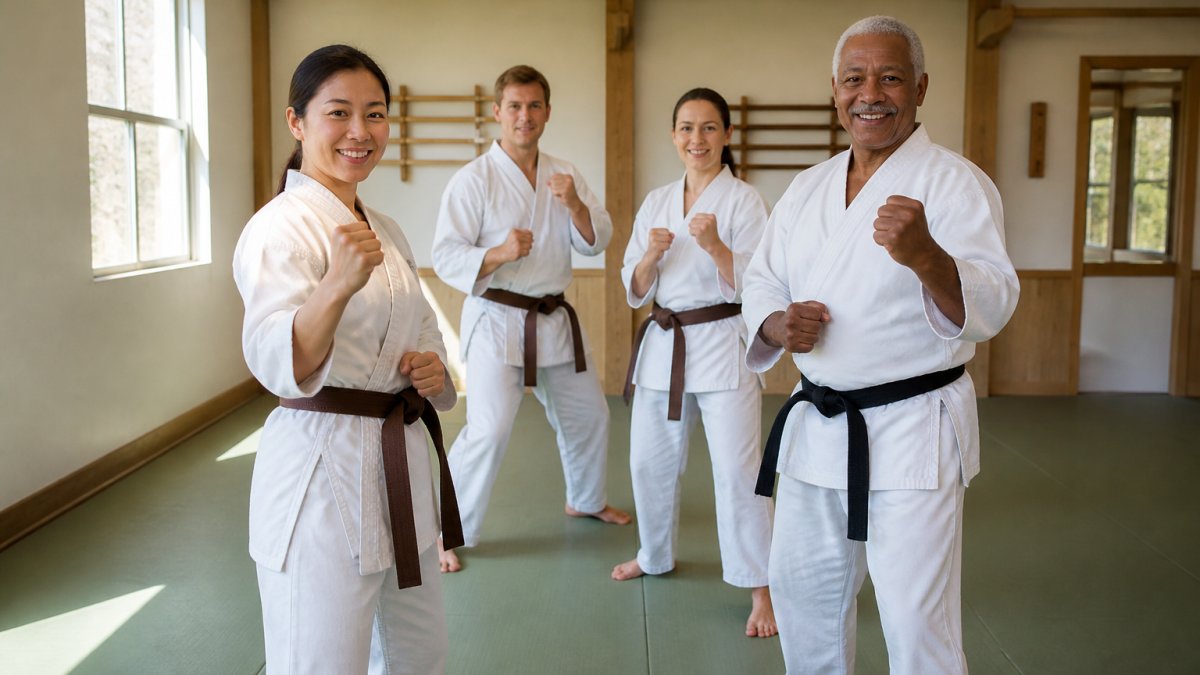
At Virginia Dojo, we welcome adults and teens in Alexandria who want training that builds them up without pressure. Non competitive martial arts for adults fit that need exactly. No scoreboard. No competition. No pressure to move up belts fast. Just steady skill and confidence.
Below, we break down the styles worth considering, how often to train, and how to spot a school that truly keeps things low-pressure.
A Numbered List of Non Competitive Martial Arts to Consider
Here are the styles adults in Alexandria ask us about most, ranked by how well they suit a low-pressure start. The ranking weighs four things: how quickly a beginner can move at their own pace, how much body contact the art requires by design, how much gear you need on day one, and how well the training carries over into daily balance and self-defense.
- Karate (Okinawan styles such as Shorin Ryu), structured, low-gear, strong on stance and balance
- Tai chi, slowest pace, zero contact, best for balance and joint-friendly movement
- Kung fu, wide range from soft to athletic; pick a school that teaches forms at a measured pace
- Boxing and Muay Thai (drill-focused classes), conditioning-heavy; ask about contact level before enrolling
For a deeper look at low-contact options that keep training safe, read our guide to low-contact martial arts for adults.
Karate and Other Striking Arts
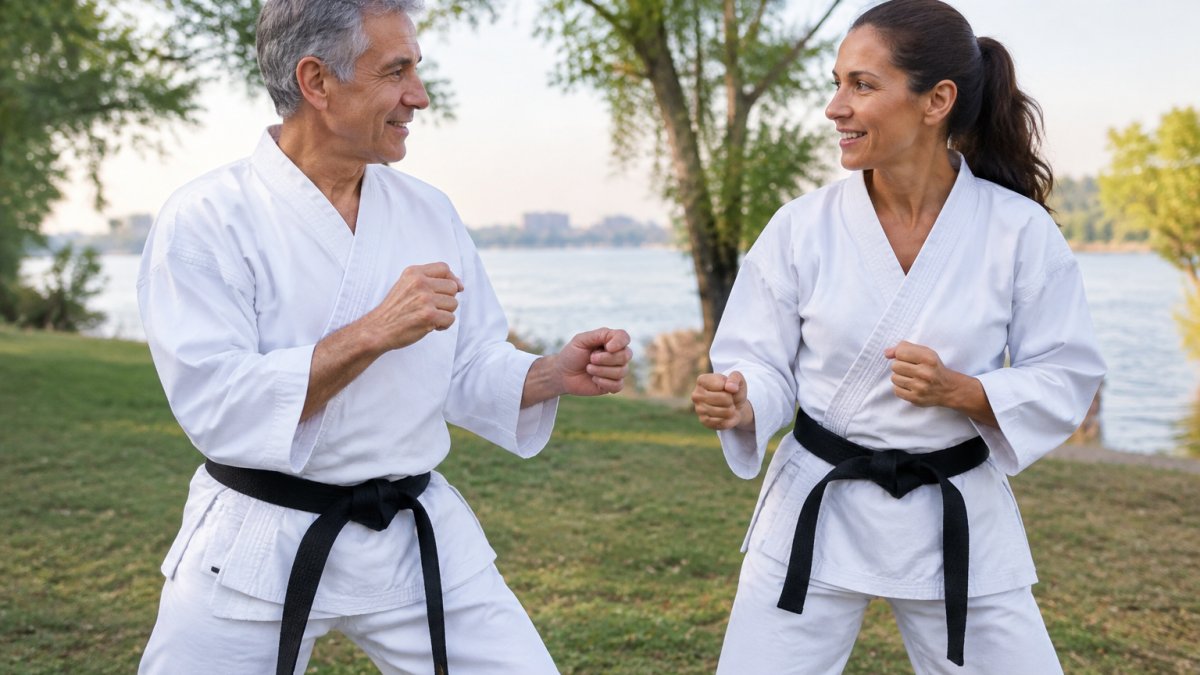
Karate is the classic entry point. You learn stances, blocks, strikes, and kicks at your own pace. Okinawan Shorin Ryu emphasizes natural movement over brute strength. You also explore standup tussling /grappling.
Ask before you sign up how much partner contact a beginner class includes, and whether you can try or observe a session first.
Kung Fu, Tai Chi, and Internal Arts
Internal arts suit adults who want movement quality over intensity.
Martial Arts for Beginners Adults Can Actually Start
A common mistake is signing a long agreement before trying a class. Try before you commit.
Practical Self-Defense Training That Works in Real Life
Practical self-defense training teaches responses you can actually use. It is about getting home safe.
One of our students, Amanda from Alexandria, put it plainly: "I owe you my life! If I had never set foot in your self-defense karate class... I would be dead!"
For a step-by-step path, see our guide on how to learn practical self-defense.
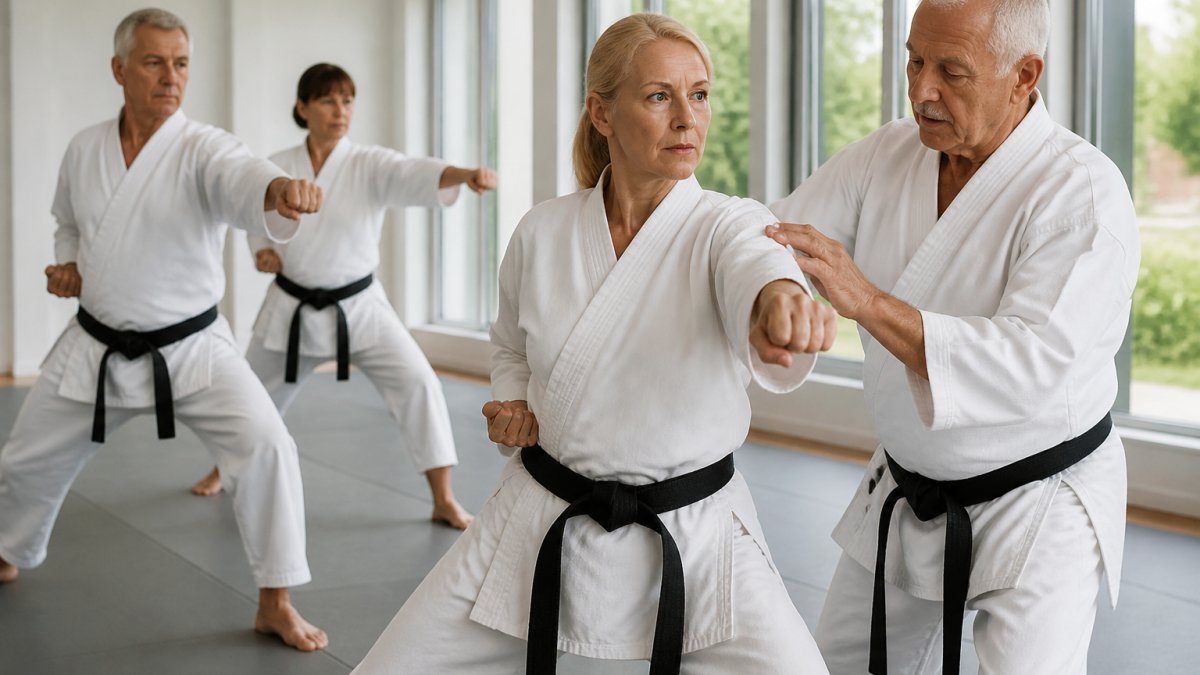
Martial Arts for Older Adults: Balance, Flexibility, and Confidence
Start Now Before Someone Nabs Your Spot in Class! →
If you are starting later in life, our beginner's guide to starting martial arts at 55 walks through what to expect.
How Often Should an Adult Beginner Practice Martial Arts?
Two or three times per week is the sweet spot for most adult beginners. That pace lets your body recover while skills still build through repetition.
Once the basics feel natural, three sessions per week speeds progress. Daily practice is not needed at the start, and it raises injury risk.
Signs your schedule is working:
- Less soreness after each class
- Better balance on stairs and uneven ground
- Faster recall of basic techniques
- Steadier breathing under mild stress
Here is the practice frequency guidance we give adults starting out.
Training frequency | Best for | Note |
|---|---|---|
Two/Three times a week | Most adult beginners | Sweet spot; lets body recover while skills build |
Three sessions per week | Once basics feel natural | Speeds progress |
Daily practice | Not needed at the start | Raises injury risk |
How to Tell Whether a School Is Genuinely Non Competitive
Most schools will tell you they are low-pressure. Fewer actually run that way. The gap between the brochure and the room is where adults get burned, so here is a practical way to check before you sign anything.
Watch or Try a class before you join
Sit in on a beginner session and watch three things:
how the instructor corrects students,
how students treat each other, and
how much of the hour is spent on basics versus performance.
A genuinely low-pressure room spends most of its time on stance, footwork, and simple technique, not on ranking students against each other.
Ask these questions directly
- "What does belt testing look like, and is there a fixed timeline?", A school that pushes every student to test on the same schedule is running a business model, not a training program.
- "How much partner contact is in a beginner class?", The answer should be specific, not vague. "It depends" is a red flag.
- "Is there a contract, and what is the cancellation policy?", Month-to-month is the norm at low-pressure schools. Long agreements signed on day one rarely keep training relaxed.
- "Can I try a class before committing?", A free or low-cost trial class is standard. If a school will not let you observe or try first, walk away.
- "How do you handle a student who wants to move slower?", The answer tells you whether the school adapts to the adult or expects the adult to adapt to the school.
Read the room, not the brochure
Signals of a genuinely non competitive school:
- Instructors correct technique, not compare students
- Class time goes to basics and self-defense
- Students of mixed levels help each other without hierarchy pressure
- The schedule includes slower-paced adult sessions alongside faster ones
Signals to walk away from:
- A contract pushed on day one
- Focus on physical fitness drill more than self defense
- Rank or belt progress tied to a fixed calendar
- Instructors who talk more about winning than about technique
- Free-Sparring in class
- A beginner class that feels like an audition
You can also read about our instructors and how they teach before you visit. The right school will let you watch, ask, and try before you commit, and will not pressure you to decide on the spot.
Book Your Free First Class at Virginia Dojo
The hardest part is the first step through the door. Our classes for adults and mature teens in Alexandria are led by a 9th-degree master with over 50 years of experience. Training focuses on natural movement and real-world self-defense, not brute strength. There is no contract.
Check the class schedule and pick a time that fits your week. We will see you on the mat.
Frequently Asked Questions
Is it normal to start martial arts as an adult?
Yes. Adult beginners are a large and growing group. At Virginia Dojo, the program is built for adults and mature teens, so you are not joining a room full of people who started at age eight. Plus there are no kids.
What is the least aggressive form of martial arts for adults?
Okinawan Shorin Ryu karate, the style taught at Virginia Dojo, emphasizes natural movement and real-world self-defense rather than brute strength. If low contact and a calm training pace matter most to you, ask any school directly how much contact happens in a typical class before you sign up.
Can adults learn martial arts with no prior experience?
Yes. Coordination and conditioning build over weeks, not on day one. A free first class is the simplest way to test whether the pace suits you.
How often should an adult beginner practice martial arts?
Two or three classes per week is the usual starting point for adults, which gives enough repetition to build technique and balance without overloading joints and muscles that are new to the movement. Older adults and anyone returning after a long break should start at two sessions and add a third only once recovery feels easy.
Ready to build balance, flexibility, and confidence without pressure? Get started with Virginia Dojo and book your free first class in Alexandria today.