 How-to
Can Martial Arts Improve Balance and Flexibility After 50?
Last Updated: November 5, 2026
Quick Summary
Martial arts balance and flexibility training works because every stance, step, and slow kick asks your body to stay steady while moving through a wider range of motion. A 2022 review reported balance gains of 20.5% and flexibility changes of 11.1% to 316.7% among older participants. Expect balance to improve before flexibility, with hip and hamstring range taking longer.
- Start with three drills: slow front kicks, horse stance weight shifts, and ankle and hip circles.
- Do each drill for two minutes before class and repeat at home on off days.
- If you cannot hold the end position for two seconds without trembling, reduce the range.
- Leave at least one full day between demanding classes when you are starting out.
- Soreness lasting more than two days means cutting back to one class plus home practice.
Table of Contents
- Why Martial Arts Balance and Flexibility Training Suits Older Adults
- Martial Arts for Seniors: What the Evidence Says About Balance and Mobility
- Martial Arts Flexibility Exercises You Can Start This Week
- How Often to Practice Martial Arts for Steady Progress
- A Safe, Progressive Beginner Plan for Balance and Flexibility
- Choosing a Qualified Instructor and Accessible Training in Alexandria
- Start Your First Class at Virginia Dojo
- Frequently Asked Questions
Why Martial Arts Balance and Flexibility Training Suits Older Adults
Martial arts balance and flexibility training works because it trains both systems at once: every stance, step, and slow kick asks your body to stay steady while moving through a wider range of motion. A 2022 review in PubMed Central's analysis of hard martial arts for older adults reported balance gains of 20.5% and flexibility changes ranging from 11.1% to 316.7% among older participants. At Virginia Dojo in Alexandria, Virginia, we teach Okinawan Shorin Ryu Shi-Do Kan Karate to adults and mature teens, and we see the same pattern in class: students who arrive stiff and cautious move more freely within weeks.
Balance is your body's ability to hold position while your center of gravity shifts. Flexibility is the range of motion available at a joint. Karate trains both through slow, controlled movement rather than brute strength.
That distinction matters after 50. You are not trying to out-muscle anyone. You are teaching your feet, hips, and core to work together.
Martial Arts for Seniors: What the Evidence Says About Balance and Mobility
The research on martial arts for seniors points in one direction: consistent practice improves how well you move. The same 2022 review of martial arts training outcomes found strength gains of 9.3% to 34%, mobility improvements of 9.5% to 13.6%, and aerobic endurance gains of 13.4%. A 2026 study in Frontiers in Psychology on perceived health benefits of martial arts found practitioners report better fitness, strength, and flexibility.
Realistic Timelines for Seeing Results
Progress is gradual, so expect changes over several weeks of consistent practice. Balance often improves before flexibility. Hip and hamstring range of motion takes longer because those tissues adapt slowly.
Martial Arts Flexibility Exercises You Can Start This Week
Start with three drills that build range of motion without strain. Do each one for two minutes before class, and repeat the sequence at home on off days. The goal is controlled movement through the range you already have, not forcing a deeper stretch.
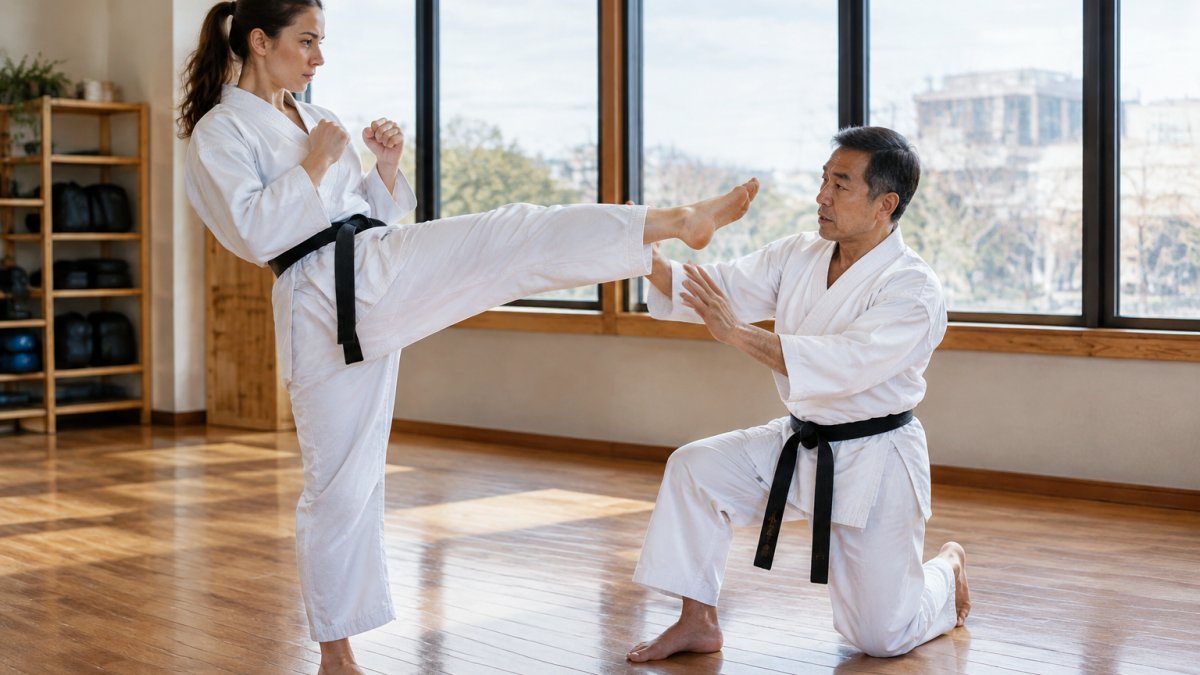
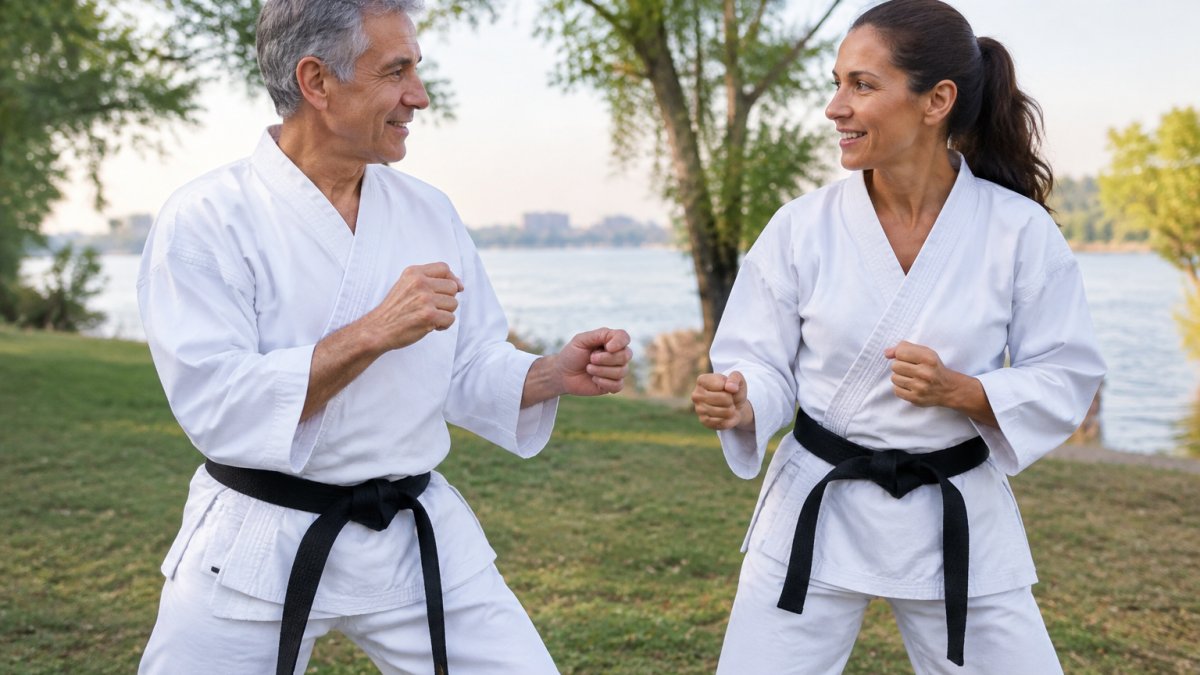
Practising controlled kicks can build confidence in your movement, and pairing them with other gentle routines can make staying active after 50 feel more manageable.
- Slow front kicks. Lift one leg to knee height, extend the lower leg, then lower it under control. Ten per side. Keep the standing knee soft and the torso upright; if your hip hikes up, lower the kick height.
- Weight shifts in horse stance. Stand with feet wide, sink slightly, and shift your hips side to side. Thirty seconds. Keep your knees tracking over your toes rather than collapsing inward.
- Ankle and hip circles. Ten slow rotations each direction, each joint. Move only through a pain-free arc; stop before the end range feels sharp.
How to Scale Each Drill Without Forcing Range of Motion
Range of motion improves when you repeatedly approach your current limit and back off, not when you push past it. A simple scaling rule: if you cannot hold the end position for two seconds without trembling or compensating, reduce the range by a few inches and work there.
- Kicks: start at knee height, then mid-shin, then waist height over several weeks. Use a wall or chair for balance until the movement feels stable.
- Horse stance: begin with feet narrower and a shallower sink; widen and deepen only when thirty seconds feels easy.
- Circles: slow the tempo rather than increasing the size of the circle when the joint feels stiff.
Warm-Ups, Stances, and Kicking Drills That Build Range of Motion
A proper warm-up raises tissue temperature before you stretch it. Five minutes of marching in place, arm circles, and gentle torso twists is enough. Then move into stances: front stance, horse stance, and back stance each load your hips and knees through a controlled arc.
Kicking drills build leg mobility and lower-body strength together. Keep kicks low at first. Height comes later, once your hip flexors and hamstrings adapt. A common pattern is to spend two to three weeks at each height before progressing.
Measuring Your Progress
Flexibility gains are easy to track at home with two simple tests done once a week: a slow bodyweight squat to see how low you can go with heels down, and a standing forward reach to see how close your fingertips come to your shins or toes. Record the result rather than judging by feel. Hip and hamstring range usually changes gradually over time with consistent practice.
Watch out: bouncing or forcing a stretch to hit a number is the fastest way to set yourself back. If a joint feels sharp or swollen the next day, you went past your current range, reduce it and rebuild.
How Often to Practice Martial Arts for Steady Progress
Consistent practice matters most for steady progress. Three sessions a week can speed things up, but only if you recover between them.
Consistency beats intensity every time. A student who trains twice a week for three months will outpace one who trains hard for two weeks and stops. Add ten minutes of home practice on off days for stretching and balance drills.
Recovery and Spacing Between Sessions
Balance and flexibility adapt during rest, not during the session itself. Leave at least one full day between demanding classes when you are starting out, and treat a light home stretching day as recovery rather than training. Soreness that lingers more than two days is a signal to cut back to one class plus home practice until it settles.
Start Now Before Someone Nabs Your Spot in Class! →
How to Measure Progress Realistically
Pick two or three simple markers and check them every two weeks: how long you can stand on one foot with your eyes open, how low you can squat with heels down, and how easily you can rise from a chair without using your hands. Balance often changes first, while hip and hamstring range generally takes longer. Keep a short log so you are comparing against your own baseline rather than against other students.
Adapting Frequency for Older Adults and Prior Injuries
If you are over 60, returning after an injury, or new to structured exercise, start with one or two classes a week plus two short home sessions, then add a another class once the first month feels comfortable. A common pattern is to alternate a class day with a home mobility day so no two hard sessions land back to back. If you have joint pain, balance problems, or a recent injury, check with a clinician before increasing volume, and tell your instructor so drills can be scaled.
Watch out: adding a third weekly class before your body has adapted to two is the most common cause of stalled progress. Add volume only when the current schedule feels easy for two straight weeks.
A Safe, Progressive Beginner Plan for Balance and Flexibility
Build your first eight weeks in three stages.
Stage | Weeks | Focus | Weekly Time |
|---|---|---|---|
Foundation | 1-2 | Warm-ups, basic stances, single-leg balance | 2 sessions, 30 min |
Build | 3-5 | Low kicks, weight shifting, footwork patterns | 2-3 sessions, 45 min |
Consolidate | 6-8 | Full-range movement, coordination drills, cool-downs | 3 sessions, 60 min |
Watch out: Tight hips and calves after class mean you stretched cold or pushed too far. Five minutes of slow stretching at the end prevents that.
If you are starting later in life, our guide to starting martial arts at 55 walks through the first month in detail. Pair it with these injury prevention rules for adult martial arts before your first session.
Choosing a Qualified Instructor and Accessible Training in Alexandria
Look for three things: verifiable rank, teaching experience with adults, and a training environment that matches your goals. Ask about lineage and teaching experience with adults.
Accessibility matters too. A studio near you with parking, daytime classes, and a calm atmosphere will get you there more often than a distant one with a perfect reputation. If you are searching for martial arts near me in Alexandria, visit and watch a class before you commit.
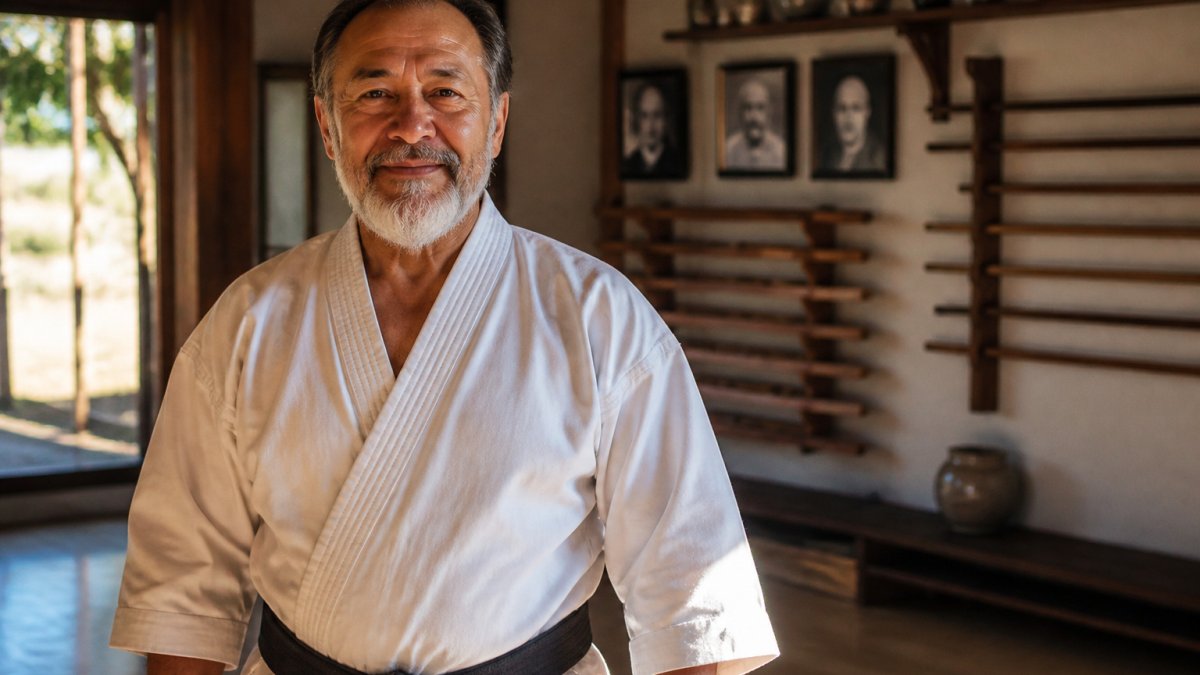
Our karate instructors in Alexandria are led by a 9th-degree master with over 50 years of training.
Start Your First Class at Virginia Dojo
Your first class is the hardest one to walk into. After that, it is just Tuesday.
At Virginia Dojo, we teach Okinawan Shorin Ryu Karate with a focus on natural movement, not strength. There are no contracts. You get a free karate uniform to start, and a 9th-degree master with over 50 years of experience leads the training.
Check the class schedule and pick a session that fits your week. Get started with Virginia Dojo and build balance, flexibility, and confidence that last.
Frequently Asked Questions
Can martial arts really help improve flexibility as you age?
Yes. The key is consistent practice that moves joints through their full range of motion. Martial arts flexibility exercises like slow kicks, controlled stances, and dynamic stretching work best when done at least twice a week. Progress is gradual, so expect weeks rather than days before you notice a difference.
How often should older adults practice martial arts to improve balance?
Beginners often start with two or three shorter sessions per week and build up. Consistency matters more than intensity. Practicing single-leg balance drills and weight shifting at home on off days can reinforce what you learn in class without adding strain.
What should beginners look for in a martial arts class for balance and flexibility?
Look for an instructor who prioritizes natural movement over brute strength, offers modifications for stiff joints, and does not require contact drills you are not comfortable with. Ask about class size, the average age of students, and whether the instructor holds a recognized rank with verifiable teaching experience. A supportive, non-competitive environment matters most for adults new to exercise. Ask to observe a class before signing anything.
Is karate suitable for adults who are new to exercise?
Karate suits adults new to exercise when the program is built around natural movement and gradual progression rather than speed or force. Stances, footwork, and slow controlled kicks build lower-body strength, core stability, and coordination at a pace you control. Start with two sessions a week, tell your instructor about any joint concerns, and skip drills that cause pain.