 How-to
What Self Defense Techniques Work in Real Life?
Last Updated: November 19, 2026
Quick Summary
The self defense techniques that work in real life are situational awareness, palm strikes, wrist grab escapes, angled footwork, and de-escalation. These simple, repeatable skills rely on position, balance, and calm rather than brute strength, and they can be practiced this month.
- Scan parking lots, keep your phone in your pocket at doorways, and note exits in every room.
- Drive the heel of an open palm toward the nose or chin; a closed fist can break small bones.
- Escape a wrist grab by turning your thumb toward their thumb and pulling straight back.
- Step off the straight line at an angle instead of stepping backward, which keeps you in their path.
- After an incident, get to a safe place, call 911, and write down what you remember.
Table of Contents
- Why Real-World Self Defense Looks Nothing Like the Movies
- Situational Awareness for Personal Safety: The Skill That Comes First
- Self Defense Techniques for Beginners: Four Moves You Can Learn This Month
- How to Learn Self Defense for Adults Without Brute Strength
- What to Do in the Minutes and Weeks After an Incident
- Building Balance, Flexibility, and Confidence Alongside Technique
- Try a Class at Virginia Dojo and Set Your Own Pace
- Frequently Asked Questions
Why Real-World Self Defense Looks Nothing Like the Movies
Real-world self defense techniques for real world situations start with a hard truth: attackers do not follow a script. Real-life attackers will not follow a carefully choreographed sequence, which is why rigid choreography can fail when it matters.
At Virginia Dojo, we teach adults and mature teens in Alexandria, Virginia a different approach. Our Okinawan Shorin Ryu classes focus on natural movement, not flashy moves.
Here is what most guides get wrong. They teach moves. We teach you to notice trouble before it reaches you, and to leave when you can.
Below, we break down the skills that actually hold up outside a classroom.
Situational Awareness for Personal Safety: The Skill That Comes First
Situational awareness for personal safety is the habit of noticing what is normal around you so that anything unusual stands out early. It costs nothing and it buys you the most important thing in any encounter: time.
Utah State University's work on self-defense education describes hands-on training in striking, blocking, and escape techniques. Awareness comes before all of it.
What we practice looks like this:
- Scan the parking lot before you walk to your car
- Keep your phone in your pocket at doorways and stairwells
- Note the exits in any room you enter
- Trust the feeling that something is off and act on it
That last point matters most. A common mistake is talking yourself out of a gut feeling to avoid seeming rude. Leave anyway.
Self Defense Techniques for Beginners: Four Moves You Can Learn This Month
Self defense techniques for beginners should be simple, repeatable, and easy to remember under stress. These four cover the most common situations, and you can start practicing them this month.
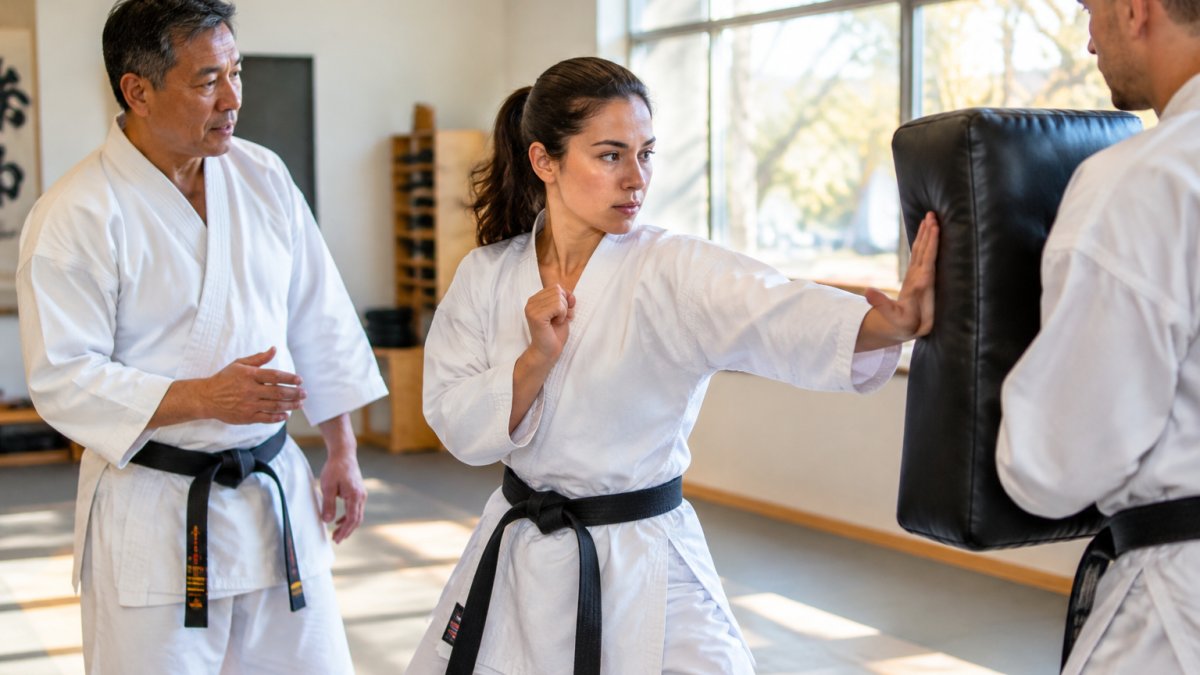
The Palm Strike
The palm strike is your safest striking option. You drive the heel of your open hand forward toward a vulnerable target, keeping your fingers back.
Why the palm and not the fist? A closed fist can break small bones in your hand. An open palm spreads the force across a wider surface and keeps your wrist in a stronger line.
Aim for the nose or the chin, then move. One strike buys seconds, not a victory. The same principle applies to elbow and knee strikes: they are close-range tools for when someone is already inside your reach, and they work because the body mechanics are short and hard to stop. You do not need power to make them useful; you need position and timing.
Breaking Free of a Wrist Grab
A wrist grab is the most common opener in a physical confrontation. The escape is mechanical: turn your thumb toward their thumb, the weakest point of any grip, and pull straight back.
Practice it slowly with a partner. Speed comes later, once the motion is muscle memory. The same thumb-line principle works on a sleeve grab or a two-handed hold: find the gap at the thumb, rotate through it, and step away as you pull.
Watch out: pulling straight back against a full grip is the most common mistake. If the grip does not release on the first attempt, change angle rather than adding force.
Footwork: Stepping Off the Line
Footwork is the skill that keeps you out of reach. When someone closes distance, step off the straight line they are moving along, at an angle.
Stepping back keeps you in their path. Stepping to the side takes you out of it. In practice, most beginners over-step backward and run out of room. A short angled step to the outside, with your weight settled, keeps your balance and gives you a clear exit line.
De-escalation and Verbal Boundary Setting
Most confrontations end with words, not hands. De-escalation means lowering your voice, keeping your hands visible, and giving the other person room to walk away with dignity.
Verbal boundary setting is the first tool. A firm "back up" or "I don't want trouble" tells bystanders and the other person exactly where you stand.
If you want a step-by-step path to practice these moves, read our guide on how to learn practical self-defense.
These four beginner techniques cover the most common situations and can be practiced this month.
Technique | How it works | Key point |
|---|---|---|
Palm strike | Drive heel of open hand toward nose or chin | Open palm spreads force; fist can break bones |
Wrist grab escape | Turn thumb toward their thumb and pull back | Thumb is the weakest point of any grip |
Footwork | Step off the straight line at an angle | Stepping back keeps you in their path |
De-escalation | Lower voice, keep hands visible, give room | Most confrontations end with words, not hands |
How to Learn Self Defense for Adults Without Brute Strength
Learning self defense for adults does not require strength, speed, or a young body. It requires repetition and good instruction.
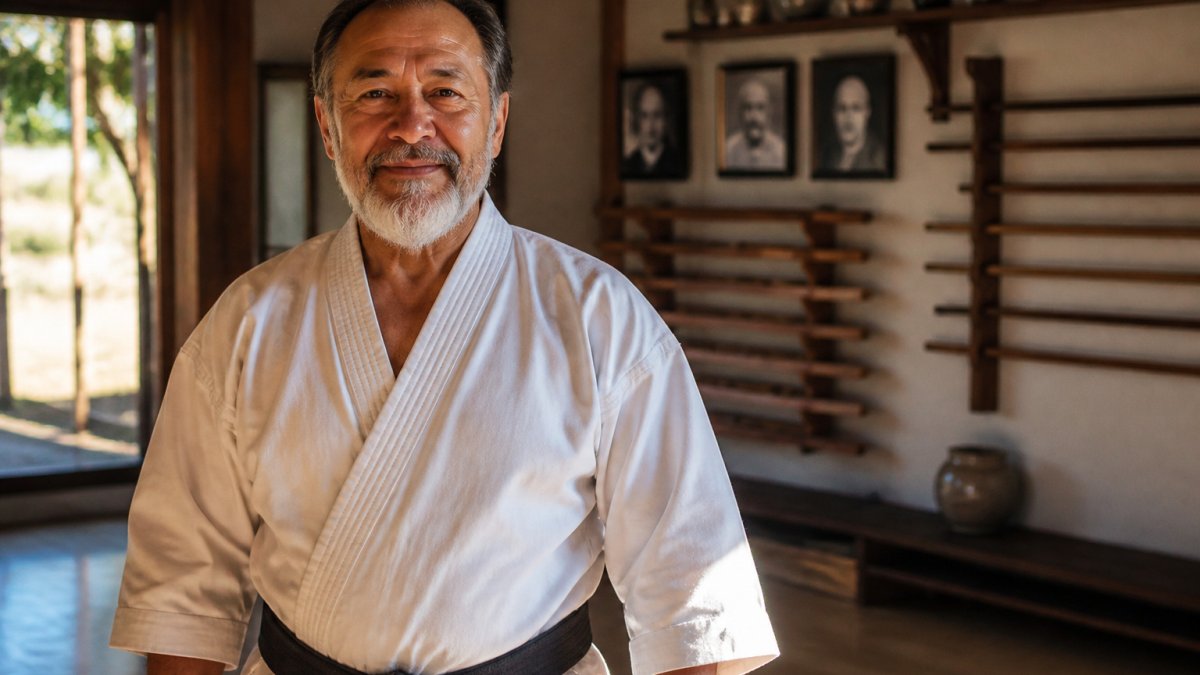
At Virginia Dojo, our classes are built on natural movement rather than force. Our 9th-degree master, with over 50 years of experience, leads our classes.
Here is the honest part. Strength helps, but it is not the deciding factor. Position, balance, and calm decide more encounters than raw power does.
Students decide their own comfort level with contact, and it increases only as rank progresses.
If you want a program designed with that in mind, see our women's self defense karate in Alexandria.
What to Do in the Minutes and Weeks After an Incident
What happens after an incident matters as much as what happens during it. The minutes after are for safety, and the weeks after are for recovery. Most self-defense guides stop at the physical technique. This section covers the part almost none of them do: the legal and psychological aftermath of a real-world encounter in Alexandria and Northern Virginia.
In the first minutes:
- Get to a safe, well-lit place with other people
- Call 911 and stay on the line
- Write down what you remember before details fade
- Ask for a medical check, even if you feel fine
- Do not post about the incident on social media before you have spoken with law enforcement
In Virginia, the legal side begins immediately. Keep a factual account of what happened, in the order it happened, since it is one of the most useful things you can preserve. Keep it factual: what you saw, what was said, what you did, and why you left when you could.
A common pattern after a real encounter is a delayed stress response. In the weeks after, watch for sleep problems, jumpiness, replaying the event, or avoiding places that remind you of it. These are common stress responses, not weakness. Talk to a doctor or counselor if they persist. Your primary care doctor can make a referral to local counseling resources.
For a printable reference you can keep at home, download our free self defense guidelines.
Building Balance, Flexibility, and Confidence Alongside Technique
Balance and flexibility are not side effects of training. They are part of it, and they matter more with age.
Karate practice builds both through slow, controlled movement. You shift weight, hold posture, and change direction. That work strengthens the muscles that keep you steady on stairs and uneven ground.
Confidence comes last, and it comes quietly.
Our article on karate for balance and flexibility in adults explains the specific movements involved.
Try a Class at Virginia Dojo and Set Your Own Pace
Training at Virginia Dojo is fun, friendly, and relaxed. Classes are laid-back and Okinawan in style, with laughter a normal part of the room. There is no ego here, and no pressure to prove anything.
Students set their own comfort level with contact. It starts light and grows with rank, at your pace.
Our adult karate classes in Alexandria welcome mature teens too. You get a free karate uniform, no contracts, and a free trial.
Check the Virginia Dojo class schedule and pick a time that works.
The gap between reading about self defense techniques and being able to use them is practice, and practice needs a room with people who take it seriously without taking themselves too seriously. Virginia Dojo offers adult self defense karate built on natural movement, a non-competitive environment, and instruction from a 9th-degree master with over 50 years of experience. Students decide their own comfort level with contact, and every class includes real-world applications. Get started with Virginia Dojo and build skills you can actually use.
Frequently Asked Questions
What is the best self-defense method for real-life situations?
There is no single best method, but the most practical systems share three traits: they teach awareness and de-escalation first, they rely on natural body movement rather than strength, and they let you practice at a contact level you choose. Okinawan Shorin Ryu karate fits this model because it emphasizes efficient movement and real-world applications. Hands-on practice of striking, blocking, and escape techniques is a core part of personal safety training.
Can adults learn effective self defense techniques without relying on brute strength?
Yes. Real-world self defense techniques depend on positioning, timing, and using an attacker's momentum against them, not on how much you can lift. A palm strike delivered with body rotation, or a wrist release that uses a turning motion, works for a smaller person facing a larger one. At Virginia Dojo, classes focus on natural movement rather than strength, which suits older adults and beginners. Real attackers do not follow choreographed sequences, so drilling adaptable movement matters more than raw power.
What role does situational awareness play in real-world self defense?
Situational awareness for personal safety is the first layer of defense because it keeps you out of confrontations entirely. Scanning your surroundings, noting exits, and trusting early warning signs give you time to leave or call for help before anything physical happens. Most self defense techniques only become necessary when awareness and de-escalation fail. Practicing awareness in class, such as noticing who is near you and where the doors are, builds the habit so it carries into daily life.
How does Okinawan Shorin Ryu Karate differ from other self-defense methods?
Okinawan Shorin Ryu emphasizes natural, relaxed movement and efficient body mechanics over athletic force, which makes it accessible to adults of any fitness level. Virginia Dojo teaches this style with real-world self-defense applications in every class and a laid-back, friendly atmosphere where laughter is expected. Students decide their own comfort level with contact, and contact increases gradually as rank progresses. That structure lets a nervous beginner start gently while still building practical skills over time.