 Ultimate guide
Finding Authentic Martial Arts Instruction: A Practical Guide
Last Updated: November 2, 2026
Quick Summary
Authentic martial arts instruction traces a documented line from a recognized system through a named instructor, with training methods that match what that system contains. Verify it by checking lineage, watching a full class, and reading the written terms before you sign anything.
- Ask any dojo to name its system, its founder, and the instructor's own teacher.
- No federal law requires martial arts instructors to pass a background check.
- Run five checks in order: lineage, experience, class composition, safety, written terms.
- Ask how an instructor adjusts technique for a student with a bad knee or shoulder.
- Our instructor holds a 9th-degree ranking and has taught for more than 50 years.
Table of Contents
- What Authentic Martial Arts Instruction Actually Means
- How to Choose a Martial Arts School in Alexandria
- What a Qualified Karate Instructor Looks Like
- Questions to Ask a Martial Arts Instructor Before You Enroll
- What to Expect From Beginner Karate Classes for Adults
- Safety, Injury Prevention, and a Positive Training Culture
- Book a Visit to the Virginia Dojo in Alexandria
- Frequently Asked Questions
What Authentic Martial Arts Instruction Actually Means
Authentic martial arts instruction is teaching that traces a direct, documented line from a recognized system through a named instructor, with training methods that match what that system actually contains. In the United States, the martial arts studio market reached $21.2 billion in 2026, according to Gymdesk's martial arts industry statistics, and IBISWorld counts 76,364 studios operating nationwide. That volume makes the search for authentic martial arts harder, not easier: a large market rewards marketing as much as it rewards substance. At Virginia Dojo, we tell prospective students in Alexandria that authenticity is verifiable, not mystical. You can check lineage, watch how a class is run, and read the terms before you sign anything. Below, we break down exactly how to do all three.
Lineage, Credentials, and the Limits of Certificates
Lineage is the documented chain of teachers a system passed through, and it matters because it tells you what a school is actually teaching. Ask any dojo to name its system, its founder, and the instructor's own teacher. A school that answers vaguely is telling you something.
Certificates alone prove less than most people assume. Yashpal Kalsi, writing in 2026, makes the point plainly: a certificate should recognize learning rather than replace the need to verify a coach's integrity, standards, and commitment to student development. There is also no single federal law in the United States requiring martial arts instructors to pass a background check, per AcademySafe's instructor verification guidance, which puts the burden of verification on you. You can review the Shidokan Shorin Ryu Karate lineage we document for our own dojo to see what a verifiable chain looks like.
How to Choose a Martial Arts School in Alexandria
Choosing a martial arts school comes down to five checks: stated lineage, instructor experience, class composition, safety practices, and written terms. Run them in order and you will eliminate most mismatches before you ever pay for a class. What separates a good decision from a lucky one is turning each check into something you can actually observe and score, rather than a box you tick on a brochure.
- Confirm the system and lineage. Ask for the style name, the founder of the system, and the instructor's own teacher. Write the answers down. A verifiable chain can be stated in one sentence; a vague one drifts.
- Verify teaching experience, not just rank. Ask how many years the instructor has taught adults specifically, and ask them to describe one adjustment they make for a student with a bad knee or shoulder. The specificity of the answer tells you more than the rank certificate.
- Watch a full class, not a demo. Sit through an entire session. Note how corrections are given, whether beginners get individual attention, and whether the pace leaves room for questions.
- Ask about safety and injury prevention. A serious school has a ready answer about warm-ups, progressive intensity, controlled partner work, and how it handles a student returning from injury.
- Get the terms in writing. For a closer look at no-long-term-contract options, see this Alexandria guide to karate classes without long term contracts. Class times, cancellation, fees, and what happens if you pause. Read the cancellation clause twice before you sign.
Travel convenience matters too: a school you can reach consistently is a school you will actually attend. Before you visit, confirm the street address and cross-street on a map, check whether parking or transit works for your schedule, and verify that the class time you want is the one you were quoted. A dojo that welcomes observation without pressure is usually confident in what it teaches.
Run these five checks in order to eliminate most mismatches before you pay for a class.
Check | What to do | What to look for |
|---|---|---|
System and lineage | Ask for style name, founder, and instructor's teacher | A chain stated in one sentence |
Teaching experience | Ask years teaching adults and one injury adjustment | Specific, detailed answers |
Watch a full class | Sit through an entire session | Beginner attention and room for questions |
Safety practices | Ask about warm-ups, intensity, partner work, returning from injury | A ready answer |
Written terms | Get class times, cancellation, fees in writing | Read the cancellation clause twice |
What a Qualified Karate Instructor Looks Like
A qualified karate instructor combines documented rank, verifiable lineage, adult teaching experience, and a safety-first approach to correction. Rank without teaching ability produces a poor class; teaching ability without lineage produces a class you cannot place in any tradition. Look for all four.
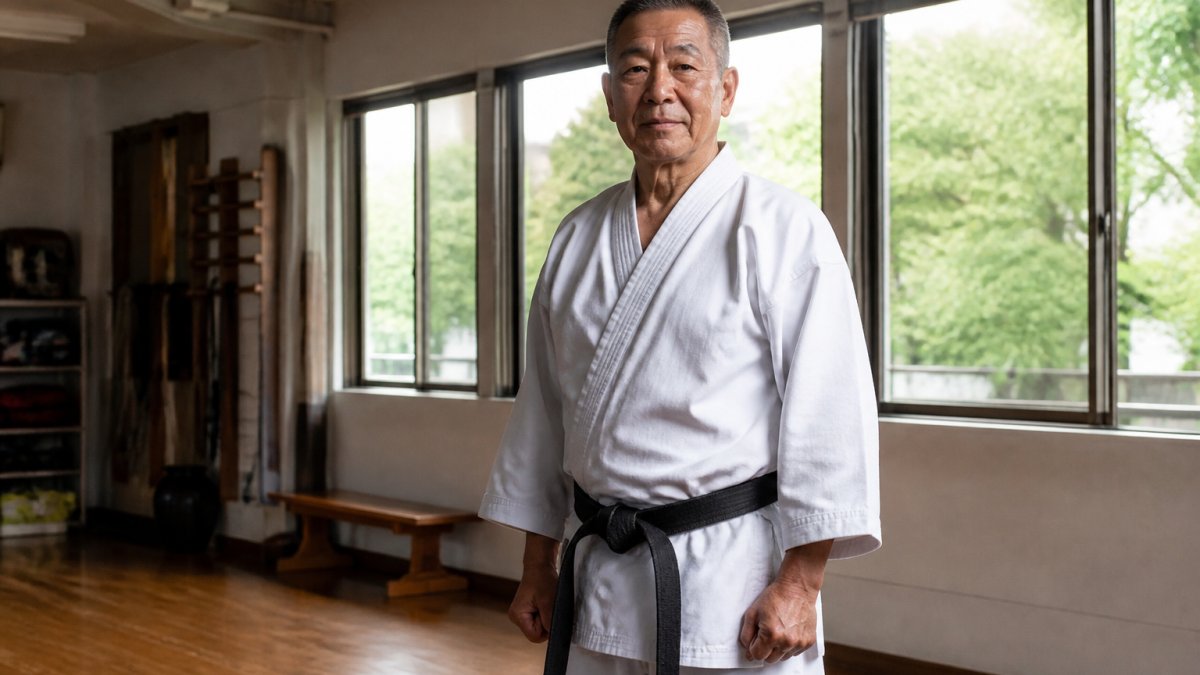
Our own instructor holds a 9th-degree ranking and has taught for more than 50 years. Ask any instructor you meet how they modify technique for a student with a bad knee or shoulder. The answer separates a teacher from a performer. You can review the backgrounds of our Virginia dojo karate instructors as a template for what to ask elsewhere.
Questions to Ask a Martial Arts Instructor Before You Enroll
The right questions get specific answers. If an instructor deflects or answers in slogans, that is data.
- What system do you teach, and who taught you?
- How many years have you taught adults specifically?
- How do you adjust training for older students or old injuries?
- What does a typical beginner's first month look like?
- What are the full costs, including testing and uniform?
- What are the cancellation terms, in writing?
- Can I observe a class before deciding?
Ask these in person and listen for specifics. Vague answers to concrete questions are the clearest signal you will get.
Start Now Before Someone Nabs Your Spot in Class! →
What to Expect From Beginner Karate Classes for Adults
Beginner karate classes for adults start with stance, posture, breathing, and basic movement, not contact. Expect a warm-up, instruction in fundamentals, partner drills at controlled speed, and a cool-down. You will be tired and clumsy for a few weeks. That is normal and it passes.
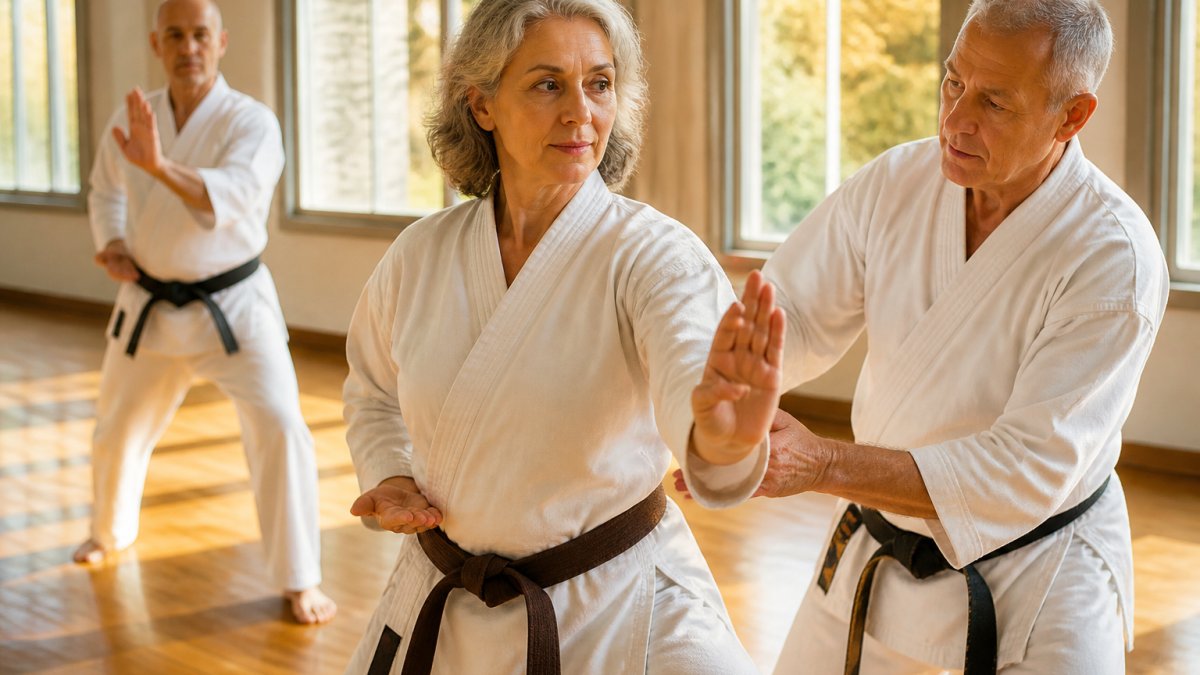
The training adapts to your body, not the reverse. Balance and flexibility are among the benefits students work toward through consistent practice. A study published in Frontiers in Psychology on traditional martial arts transmission in 2025 examined how traditional systems preserve method through group structure, which is why the room you train in matters as much as the curriculum.
Safety, Injury Prevention, and a Positive Training Culture
Safety in a dojo is a design choice, not an accident. Warm-ups that prepare the joints, progressive intensity, controlled partner work, and instructors who correct posture before adding speed all reduce injury risk. Ask directly how the school handles a student with a prior injury.
A positive training culture looks like this: beginners get attention, mistakes are corrected without humiliation, and nobody is pushed past what their body can do that day. Our injury prevention rules for adult martial arts cover the practical side in detail. Watch one class and you will know within twenty minutes whether the room feels like a place you can learn in.
Book a Visit to the Virginia Dojo in Alexandria
The fastest way to judge authentic martial arts instruction is to stand in the room. Visit us, watch a class, and ask the questions above. We teach Okinawan Shorin Ryu Karate for adults and mature teens in Alexandria, Virginia, with no contracts, and a free karate uniform comes with enrollment. Our instructor brings a 9th-degree ranking and more than 50 years of experience to a calm, non-competitive training environment built around natural movement and real-world self-defense.
Check the Virginia Dojo class schedule to pick a time, then come see how the room feels. We would rather you decide from the floor than from a brochure.
Frequently Asked Questions
How can you tell whether a martial arts instructor is qualified?
Ask about lineage and teaching history, not just rank. A qualified karate instructor can name who they trained under, how long they have taught, and what their students can do. In the United States there is no single federal law requiring martial arts instructors to pass a background check, so verification falls to you. Watch a class, ask how long they have taught adults, and check whether their claims match what you see on the floor.
What should you look for when visiting a martial arts school?
Watch how the instructor corrects students, whether beginners get attention, and how the room feels. Look at the floor and equipment condition, class size, and whether students of different ages train comfortably together. Ask about trial classes and read the enrollment agreement before signing. In Alexandria, visit at the time you would actually train so you see a normal class rather than a staged one.
What questions should you ask before enrolling in martial arts classes?
Ask who teaches the class, how long they have taught adults, what a typical session includes, and how progress is measured. Confirm the total cost, contract length, cancellation terms, and whether a uniform is included. Ask how injuries are handled and whether you can observe or try a class first. Write the answers down and compare schools on the same list.
How can you tell whether a martial arts style is authentic?
Authenticity shows in lineage and consistency. A traditional martial art such as Okinawan Shorin Ryu should trace to a named teacher and a documented line of instruction, with techniques that match that system. Ask who the instructor trained under, how long, and whether the school teaches the full system or a blend. Certificates alone do not prove quality; they should confirm learning, not replace questions about standards and teaching.
What should a beginner expect from a first martial arts class?
Expect a warm-up, basic stances and movement, some partner or solo drills, and instruction on etiquette such as bowing and addressing the instructor. A good beginner karate class for adults explains each movement and lets you work at your own pace. Wear comfortable clothing, bring water, and tell the instructor about any injuries or balance concerns beforehand.
How often should a beginner attend martial arts classes?
Two classes per week is a common starting point for adults, enough to build habit without overloading joints and muscles. Add a third session once your body adapts. Consistency matters more than volume: practicing basics at home for ten minutes between classes speeds progress. If you are returning to training after years away, start with two sessions and give yourself several weeks before increasing.
Finding a school that fits your body and your goals takes more than a web search, and the difference shows up in the first month. Virginia Dojo teaches adult self-defense karate in Alexandria with no contracts, no sparring requirements, and a free uniform to start, led by a 9th-degree master with over 50 years of experience. Get started with Virginia Dojo and train in a room where you can see the lineage, meet the instructor, and read the terms before you commit.